
In February 2026, the UK Government announced proposals for 13 new designated bathing water sites across England, a move that could significantly expand where swimmers, paddlers, and dippers can expect regular water quality monitoring.
If approved following public consultation, the new sites would join England’s existing list of more than 450 officially designated bathing waters. These spots are tested by the Environment Agency and graded as excellent, good, sufficient, or poor during the summer season.
Among the proposed additions is what would become the first designated bathing site on the River Thames in London. This is a symbolic milestone for urban wild swimming, marking a glow-up since 2012, when a single organised swim between Hampton Court and Kingston Bridge saw a staggering 338 participants struck down by gastrointestinal illness.
For those of us who spend a good chunk of our free time in rivers, lakes, and the sea, this announcement lands with a mix of optimism and caution.
So, what exactly is being proposed? And will it make a meaningful difference?
What “Designated Bathing Water” Actually Means

Image credit: Elisabeta Tutea’s Images via Canva
When a site is designated, the Environment Agency must monitor it during the bathing season, which in England typically runs from May to September. Technicians take regular water samples to test for bacteria such as E. coli and intestinal enterococci, which indicate faecal contamination.
Results are published publicly, giving swimmers clearer information about where it is safer to enter the water, particularly families, beginners, or those new to the outdoors.
Crucially, designation brings increased scrutiny to local authorities and water companies. If a site consistently scores poorly, investigations must follow, and improvement plans may be required.
However, a badge of designation isn’t a magic wand for water health. It doesn’t physically block sewage spills, filter agricultural run-off, or stop pollution after heavy rainfall. And because monitoring is seasonal, regular testing typically halts once the September chill sets in. Still, data is power and at present, many well-loved inland swim spots fall entirely outside the system.
Which Swimming Sites are on the List?
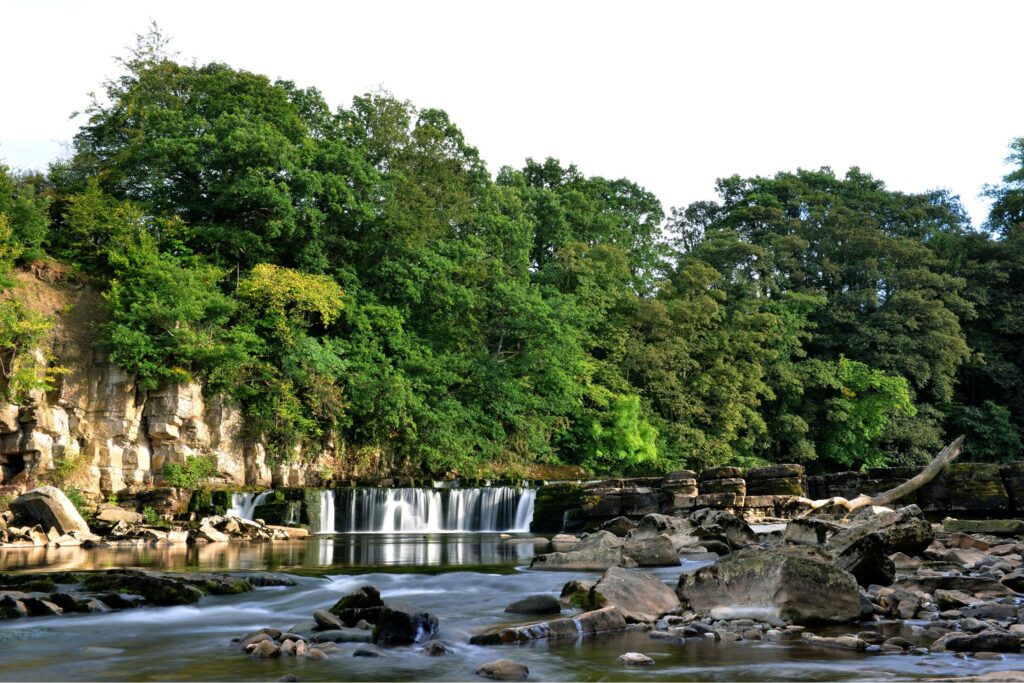
Image credit: maximus92 via Getty Images.
The 13 proposed bathing sites reflect how we actually use blue spaces today, spanning a mix of coastal beaches, rivers, estuaries, and meadow waters.
While coastal locations have traditionally dominated the list, the inclusion of several rivers recognises that adventurers are increasingly seeking variety beyond the seaside.
Here is the full list of sites now under public consultation:
- Little Shore, Amble, Northumberland – a crescent of sand between the River Coquet and the North Sea popular with locals.
- Newton and Noss Creeks, Devon – a narrow tidal inlet just off the River Yealm in the South Devon Area of Outstanding Natural Beauty.
- Canvey Island Foreshore, Essex – a unique family-favourite sandy beach.
- Sandgate Granville Parade Beach, Kent – a classic shingle beach enjoyed by swimmers and kayakers.
- Queen Elizabeth Gardens, Salisbury, Wiltshire – a river and park space in one of the city’s most cherished public gardens.
- East Beach at West Bay, Bridport, Dorset – the iconic filming location for Broadchurch, popular with families and surfers.
- Pangbourne Meadow, Berkshire – a riverside meadow and swimming spot in the area that inspired The Wind in the Willows.
- River Fowey, Lostwithiel, Cornwall – a scenic tidal river flowing through the heart of its historic town.
- River Swale, Richmond, Yorkshire – famous for its limestone steps and cascading water, a favourite among local open-water swimmers.
- Falcon Meadow, Bungay, Suffolk – a riverside community space on the River Waveney.
- River Thames at Ham and Kingston, Greater London – which could become London’s first officially designated river bathing site.
- New Brighton Beach (East), Merseyside – a sandy seaside resort at the mouth of the Mersey Estuary attracting families and watersports enthusiasts.
- River Dee at Sandy Lane, Chester, Cheshire – a popular watersports and swimming spot with deep local traditions.
Most eye-catching of all may still be the River Thames at Ham and Kingston, a stretch of water that would be London’s first designated bathing site, highlighting decades of improvement in river once declared “biologically dead.”
Why This Isn’t Just a PR Move
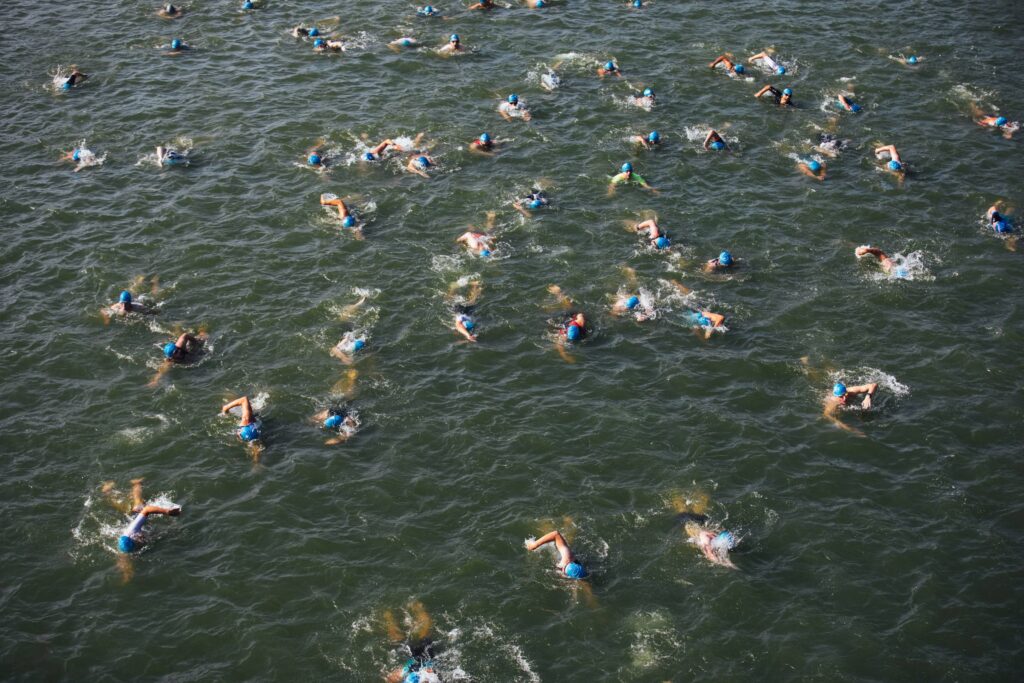
Outdoor swimming has surged in popularity over the past decade, fuelled by a renewed interest in accessible, close-to-home adventure. Cold water groups have sprouted nationwide and swim-run events are routinely oversubscribed. Even those who wouldn’t call themselves “outdoorsy” are now wading into local rivers.
Yet, regulation hasn’t fully kept pace. Earlier this year here on Adventure Brits, Tamara wrote about how the wild swimming boom is outpacing water regulations. There is an uncomfortable gap between where people actually swim and where the government actually looks.
These 13 proposals suggest an acknowledgement that our recreational habits have shifted. People aren’t just swimming at traditional seaside resorts; they’re swimming in rivers, under urban bridges, and along rural towpaths. Bringing more of these spaces into the formal monitoring system is, at the very least, an attempt to reflect reality.
It’s a Win, But Not a Fix
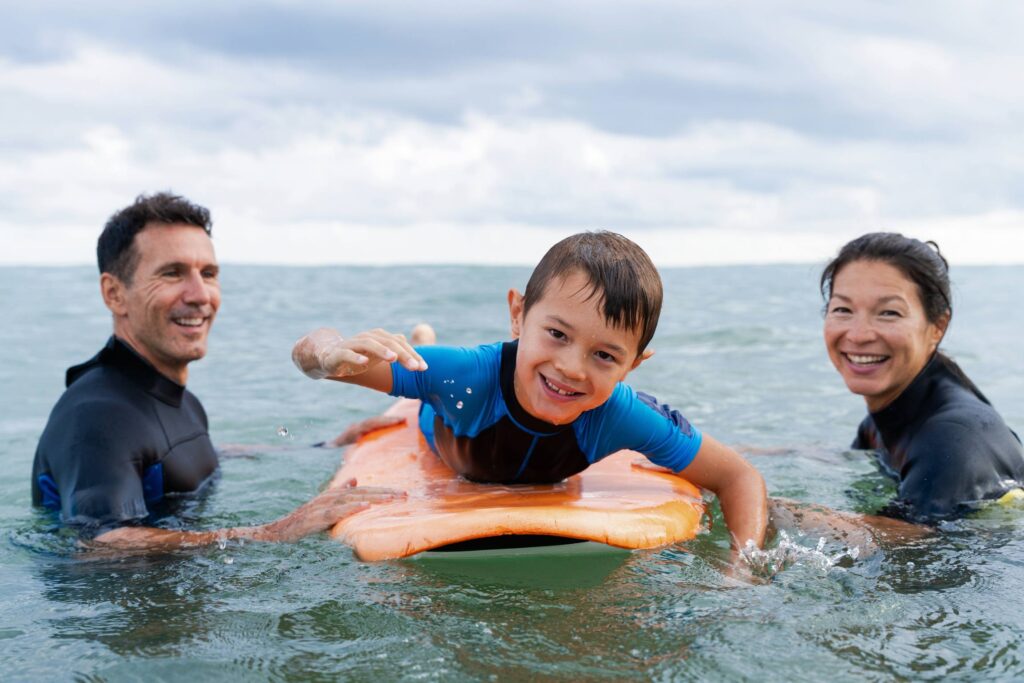
There’s plenty to welcome here. More designated sites mean more transparency, greater awareness of local issues, and more political pressure to address pollution where it affects real communities.
But it would be naïve to frame this as a total solution to England’s wider water quality crisis. Designation does not prevent sewage discharge or solve the chronic underinvestment in our infrastructure. It also doesn’t guarantee a site is safe on any given day, especially after heavy rain when pollution levels spike.
Thirteen sites are progress, but it is incremental. Thousands of miles of coastline and river remain unmonitored, and many communities still have to spend years campaigning and gathering evidence to push their local spots toward designation.
Still, change rarely arrives all at once. The public now has the chance to weigh in on these proposals before final decisions are made. If one of these spots is your local “dip,” now is the time to engage with the consultation and demand the transparency our blue spaces deserve.