
If your idea of a good time is running up a hill, why not why not tackle several of the country’s toughest together, just for kicks? Oh, and throw in a time limit to really keep things interesting. Intrigued? Welcome to the world of hill running rounds, where the only thing crazier than the elevation is racing against a ticking clock.
If you’re into trail running, adventure, or simply love a good challenge, then the UK’s famous hill running rounds are most probably on your radar. If they’re not, then you’re probably just a regular person with a healthy respect for your knees.
These iconically British endurance tests are the stuff of legend, with runners tackling some of the most stunning (and brutal) terrain in the country, all with one goal: to conquer a series of peaks within 24 hours.
Through blisters, sweat, and a hell of a lot of pain, a round is a physical and mental test like no other.
In this ultimate guide to round running, we’ll dive into the details of the six most famous rounds across the UK and Ireland. From the routes and navigation tips, to the success rates and some fun facts thrown in, we’ve got pretty much everything you need to know.
Let’s go!
What is a Fell Running ‘Round’?
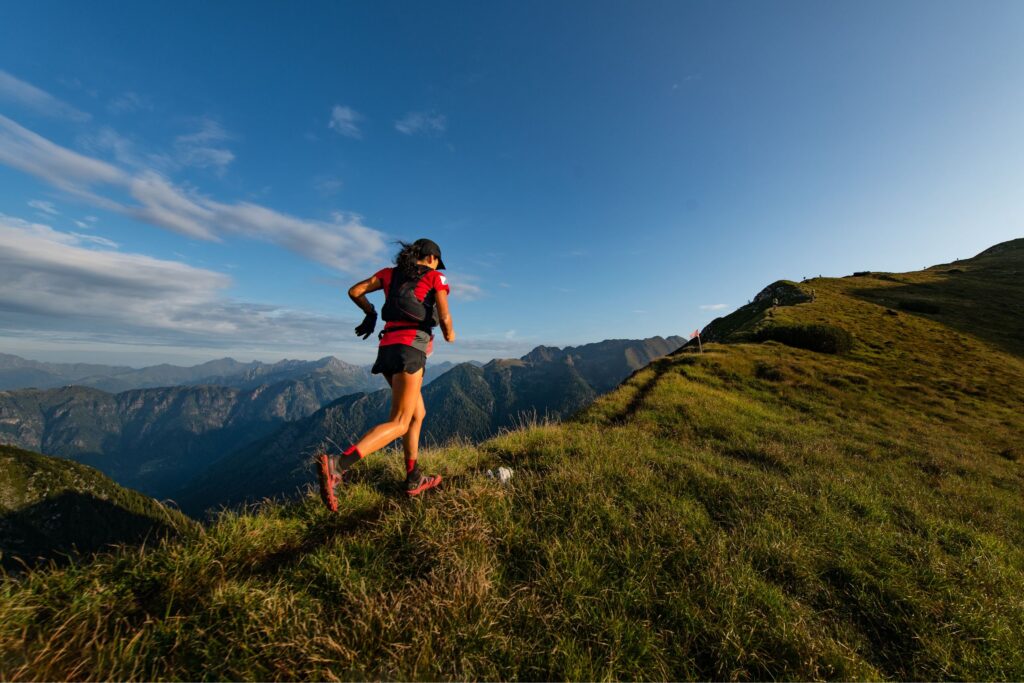
Image credit: Immagini di Michelangelo Oprandi via Getty Images.
In the simplest terms, a ’round’ is a long-distance hill running challenge that typically involves summiting a series of peaks or mountains within a set time limit – usually 24 hours.
The term originates from the circular nature of many of the routes, where runners start and finish in the same place, completing a full ’round’ of the selected peaks.
A round tests a runner’s endurance, fitness, and navigational skills, often through remote and challenging terrain.
Each round has its own set of peaks and rules, and some are named after the first person to complete or create the challenge, like the Bob Graham Round or the Ramsay Round.
While each round varies in distance, elevation, and difficulty, the common thread is the extreme physical and mental stamina required to complete them under a ticking clock.
A round is absolutely no easy feat to complete – let alone with a time limit!
Why are Rounds So Popular?
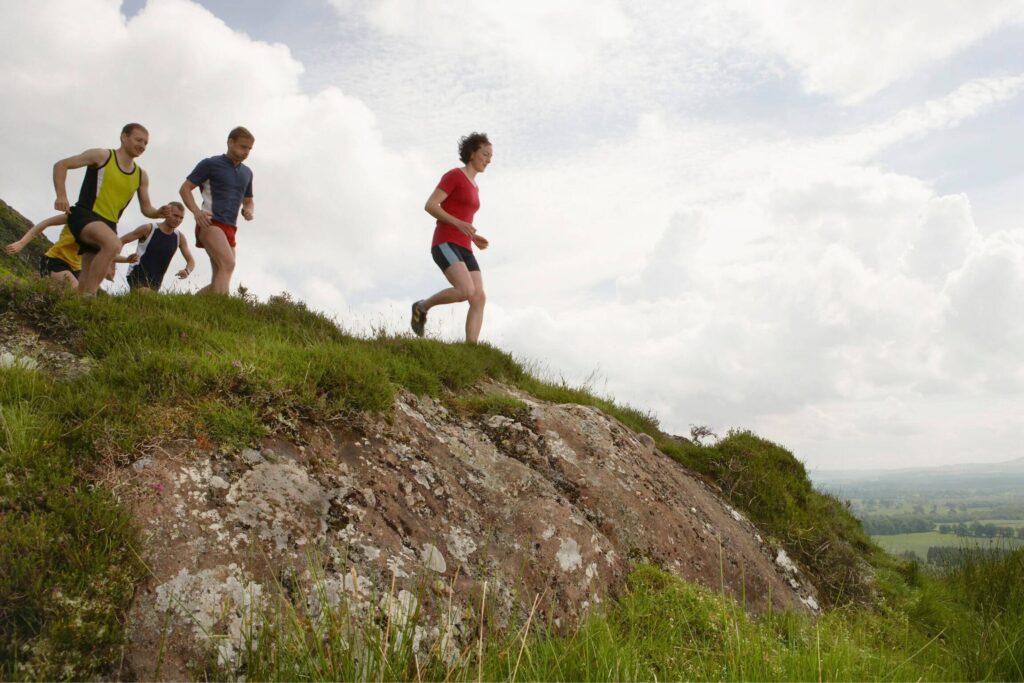
Image credit: IPGGutenberg via Getty Images.
There’s no single reason people embark on a round – the motivations are often personal, but they can generally be divided into three categories.
The Physical Challenge & Sense of Achievement
The allure for many is surely the sheer physical challenge, to test oneself to their utmost limits. Pitting yourself against some of the toughest terrain in the UK, knowing that only a small percentage of people manage to complete the round successfully, is sure to deliver one hell of an ego boost.
It’s not always about the medal or trophy, but the satisfaction of knowing they pushed and accomplished something truly extraordinary.
For some, it’s about beating their own PBs or completing a personal goal they’ve set for themselves. Every peak, mile, and hour on the hills is an opportunity to grow and develop as an athlete, no matter whether the round is successful or not.
Especially in the hill running community, completing a round is considered a major milestone. It’s a bucket-list achievement that utterly separates the casual runner from the dedicated and hard-core adventurer.
A Connection with the Landscape & Nature
Runners often take on these challenges to immerse themselves in some of the UK and Ireland’s wildest and remote landscapes.
The beauty of traversing rugged peaks, valleys, and moorlands often inspires runners to embark on a round, seeing familiar routes in new ways, or discovering new routes, or corners of the country they may never have visited before.
Community and Legacy
The UK has a long tradition of hill running, with some rounds dating back almost a century. These rounds have become legendary within the running community, passed down through generations of athletes as rites of passage.
Whether it’s trying to match or beat the records of legendary runners or simply completing a round that has been tackled by generations of adventurers, there’s a sense of history that accompanies each of these challenges.
The UK’s Most Famous Rounds
Hill running rounds in the UK are famous for their challenging routes, steeped in tradition and set against some of the most breathtaking and rugged landscapes in the country. They’re an endurance test like no other.
Here are details on some of the country’s most famous fell running challenges, followed by a table comparing all of the route statistics.
The Bob Graham Round (Lake District)
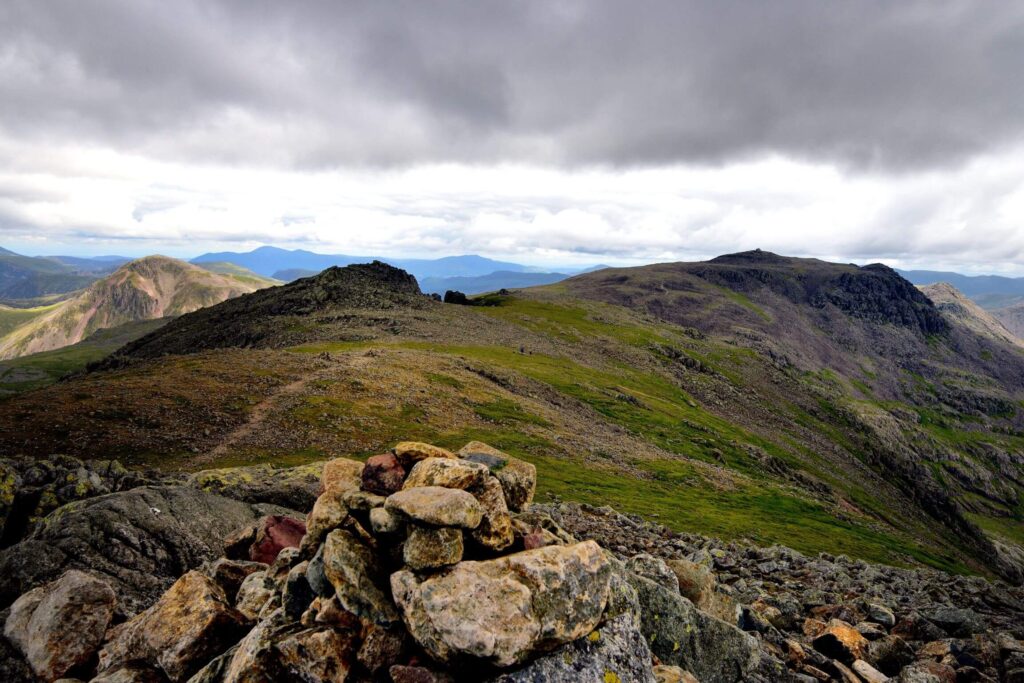
Image credit: Drew Rawcliffe via Getty Images.
No discussion of hill running rounds would be complete without mentioning the legendary Bob Graham Round, so this is where we shall start!
Established in 1932 by Bob Graham himself, this is one of the most famous and oldest fell running challenges in the world.
Have a read of our interview with Joe about his Bob Graham Round experience to really get a feel for what it’s like!
The Route & Terrain
This 106-kilometre (66 mile) loop takes runners through 42 of the Lake District’s most iconic peaks, including Scafell Pike, England’s highest mountain.
With over 8,200m of ascent, the Bob Graham Round demands serious climbing ability.
The route offers stunning views, but don’t let the beauty fool you – the terrain is brutal, with rocky paths, steep ascents, and unpredictable weather.
The challenge? Complete the round within 24 hours. With a success rate hovering around 50%, this isn’t a challenge to be taken lightly.
Those who complete it join an exclusive club of finishers, many of whom return to set faster times or assist others in their attempts.
Navigation & Route Planning
The Lake District in Cumbria is known for its fickle weather, so being able to navigate in fog, rain, and wind is essential.
There’s no set or marked route, which means you’ll need to study maps, plan your lines, and make sure you’re confident finding your way over challenging terrain.
The Wicklow Round (Ireland)
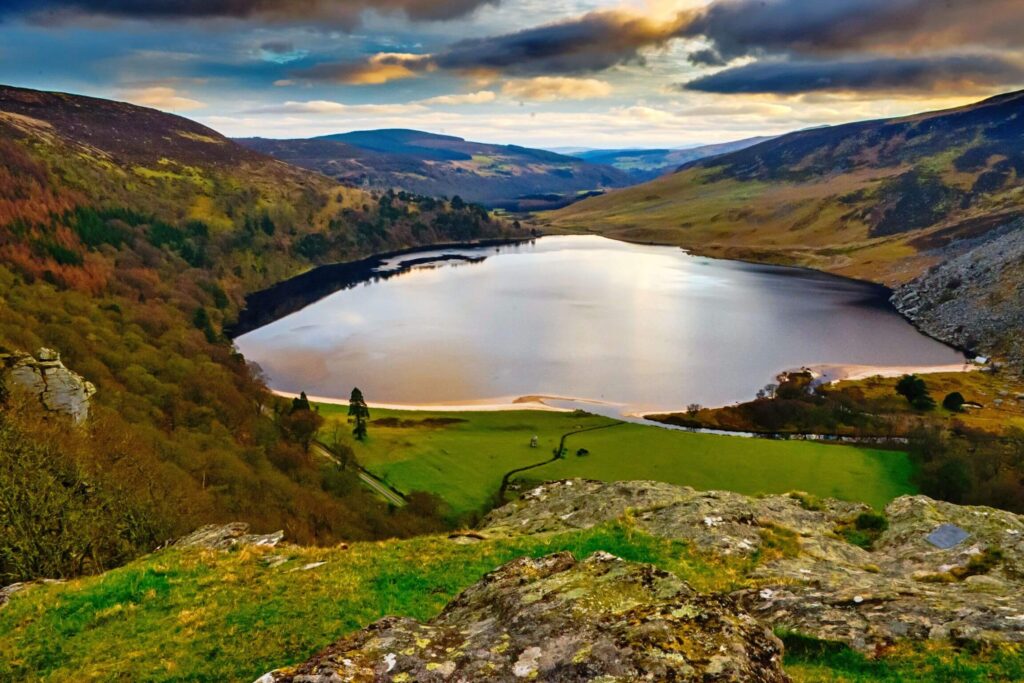
Image credit: Daniel O’brien Photography via Getty Images.
The Wicklow Round takes place in the midst of the Wicklow Mountains, just south of Dublin in Ireland. While these peaks may not be the tallest in Ireland, they pack a punch when combined in this formidable challenge.
The Route & Terrain
Spanning over 100 kilometres (62 miles) and climbing more than 6,000 metres, the Wicklow Round takes runners through boggy trails, steep ascents, and rocky paths, crossing 26 peaks in the process.
The terrain is relentless, with sections of open mountain that can quickly become treacherous in poor weather.
Add in the challenge of navigating through low-visibility mist, and you’ll soon realise why this is one of the most iconic hill running challenges in Ireland.
Runners have 24 hours to complete the full circuit of peaks. While that might sound like plenty of time, the technical terrain and elevation gain mean there’s little room for error. Getting lost is not an option.
Successful completions are celebrated within the Irish mountain running community, with a coveted spot on the Wicklow Round finisher list.
Navigation & Route Planning
The Wicklow Round is notorious for its navigational challenges. You’ll need to plan your route meticulously, especially given the boggy, pathless sections.
GPS devices can help, but a solid understanding of map reading and compass work is crucial, especially if the infamous Irish mist rolls in…
The Paddy Buckley Round (Wales)
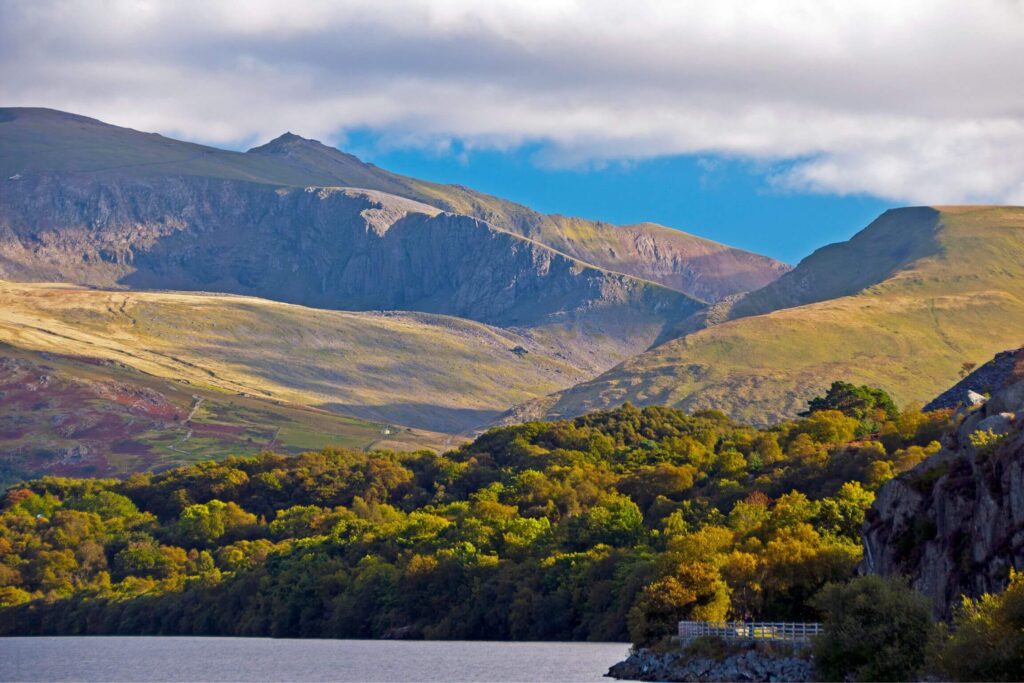
Image credit: JohnDavies49 via Getty Images.
Northern Wales offers some of the wildest and most rugged terrain in the UK, and the Paddy Buckley Round is one of the more extreme ways to experience it.
Often referred to as the Welsh cousin to the Bob Graham Round, this challenge is every bit as tough – and maybe even a little more! It’s often considered as having the lowest success rate, hovering around 30%.
The Route & Terrain
The Paddy Buckley Round is longer and has more ascent than the Bob Graham, covering approximately 100 kilometres (62 miles) and climbing over 8,500 metres.
Runners will cross a whopping 47 summits in Snowdonia National Park (Eryri National Park), with plenty of rocky, technical sections.
Just like the other rounds, the goal is to complete the route within 24 hours.
Navigation & Route Planning
Navigating in Snowdonia can be tricky, particularly in the northern sections of the round. Many of the summits are pathless, requiring careful planning and solid navigational skills.
The ability to make quick decisions in challenging conditions is key, especially when weather conditions deteriorate rapidly. Pre-race recces are highly recommended.
The Denis Rankin Round (Northern Ireland)
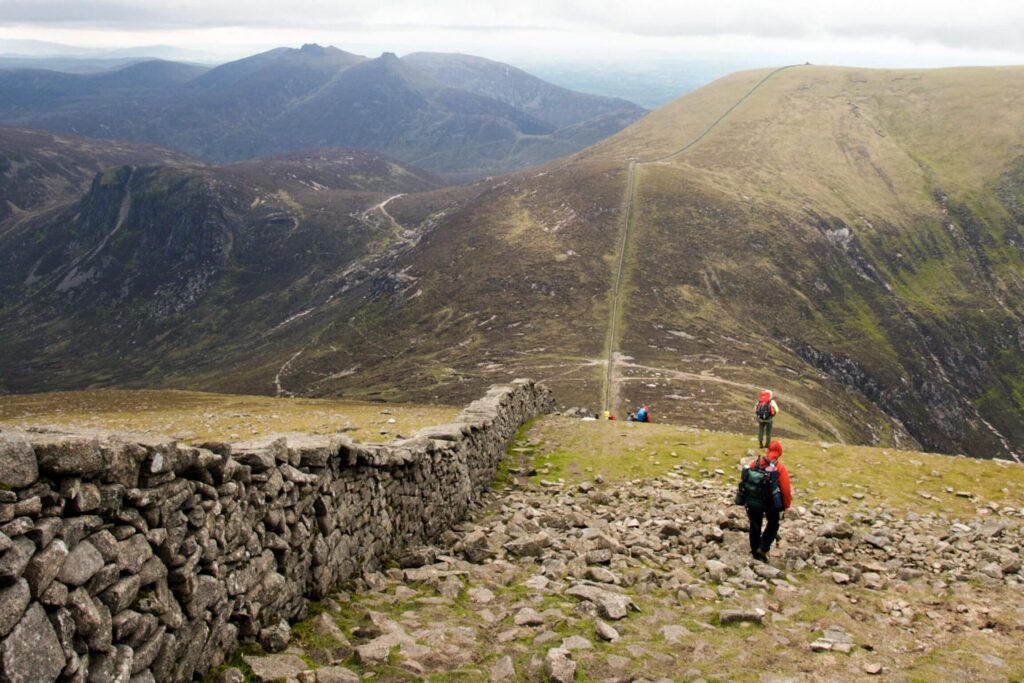
Image credit: Rafal Belzowski via Getty Images.
Named after renowned hill runner Denis Rankin, this round is a tribute to his legacy and a challenge to those who dare take it on. Set in the Mourne Mountains of Northern Ireland, it’s a brutal yet beautiful challenge.
The Route & Terrain
Covering 90 kilometres (56 miles) and climbing over 6,000 metres, the Denis Rankin Round crosses 39 peaks in the Mourne Mountains, and needs to be completed within 24 hours.
Although it is the shortest round by only a few miles, it’s still no easy feat. The terrain is a mix of rocky ascents, grassy ridges, and boggy ground, all set against the backdrop of stunning Northern Irish landscapes.
Navigation & Route Planning
The Mournes are less well-trodden than other ranges, so navigation can be challenging. The terrain can be boggy and wet. You’ll need to be able to move quickly and confidently across rough terrain, particularly in poor visibility.
The Ramsay Round (Scotland)
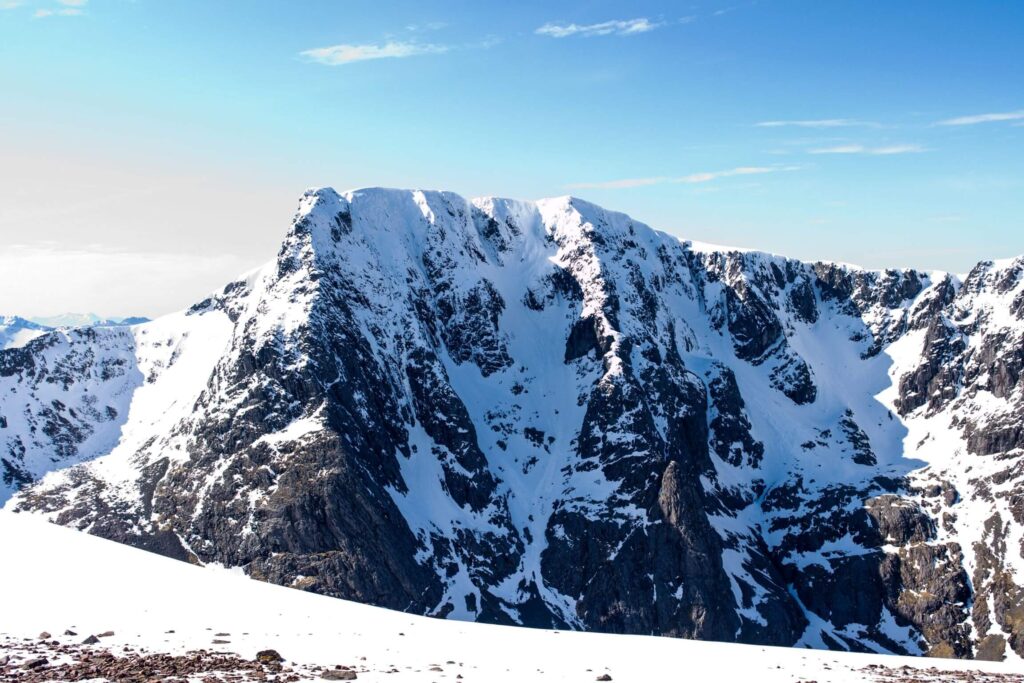
Image credit: JohnLenehanUK via Getty Images.
The Scottish Highlands are known for their wild, untamed beauty, and the Ramsay Round takes runners deep into the heart of it. It’s the northernmost of the big six hill running rounds, and it’s not for the faint-hearted.
First established by Scottish runner Charlie Ramsay in 1978, when he completed the challenge with only two minutes to spare, his daring feat laid the foundation for Scotland’s most iconic – and extreme – mountain marathon.
The Route & Terrain
The Ramsay Round covers 93 kilometres (58 miles) and climbs a staggering 8,600 metres, crossing 24 Munros, including Ben Nevis (Beinn Nibheis), the highest mountain in the British Isles.
The terrain is some of the most rugged and challenging in the UK, with rocky ridges, steep ascents, and remote wilderness.
The 24-hour time limit remains, but with such extreme terrain and unpredictable Scottish weather, this round is considered one of the toughest up there with the Paddy Buckley Round.
Navigation & Route Planning
Navigation in the Scottish Highlands is notoriously difficult. Fog, wind, and rain can reduce visibility to almost zero, so being confident with a map and compass is vital, though a GPS can help.
The South Wales Traverse (Wales)
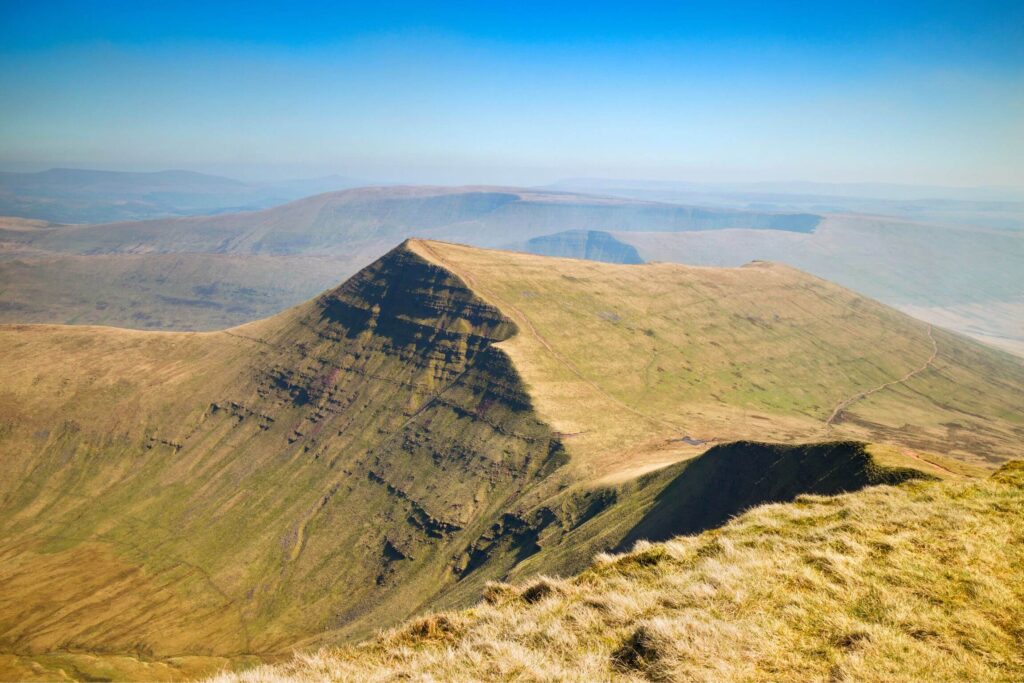
Image credit: Susan Daniels via Getty Images.
Finally, we head to South Wales for the South Wales Traverse, a lesser-known but equally challenging hill running round that crosses the Brecon Beacons National Park (Bannau Brycheiniog National Park).
The Route & Terrain
The South Wales Traverse covers around 120 kilometres (75 miles, and the longest of these rounds) and climbs over 5,500 metres, crossing the main peaks of the Brecon Beacons and Black Mountains.
The terrain is a mix of grassy ridges, rocky outcrops, and boggy sections – classic South Wales at its finest.
As with the other rounds, you’ll need to complete the South Wales Traverse within 24 hours. While it’s slightly less extreme in terms of elevation, the long distance and tricky terrain will still test elite runners.
Navigation & Route Planning
Although some parts of the route follow more established paths, the traverse also includes grassy ridgelines, rocky outcrops, and boggy moorland. As with all of these rounds, successful navigation is all part of the challenge!
Comparison Table of the Rounds
Want to compare each of these six rounds side by side? Here you go:
| Round | Location | Distance | Ascent (m) | Number of Peaks | Success Rate | Estimated Difficulty |
| Bob Graham Round | Lake District, England | 106km / 66mi | 8,200 | 42 | ~50% | Moderate to High (due to terrain and navigation challenges) |
| Wicklow Round | Wicklow Mountains, Ireland | 100km / 62mi | 6,000 | 26 | ~40% | High (boggy terrain and navigation issues with mist) |
| Paddy Buckley Round | Snowdonia, North Wales | 100km / 62mi | 8,500 | 47 | ~30% | Very High (technical, difficult navigation, low success rate) |
| Denis Rankin Round | Mourne Mountains, N. Ireland | 90km / 56mi | 6,000 | 39 | Unknown (newer round, estimated low) | High (varied terrain, boggy and rocky sections, less well-known route) |
| Ramsay Round | Scottish Highlands, Scotland | 93km / 58mi | 8,600 | 24 | ~50% | Very High (rugged terrain, unpredictable weather, difficult navigation) |
| South Wales Traverse | Brecon Beacons, South Wales | 120 / 75mi | 5,500 | Varies | ~50% | Moderate to High (less elevation, but long distances and tough conditions) |
Top Tips for Taking on a Round

So, you fancy giving it a go yourself, do you? You’re brave, we’ll grant you that much.
Completing a hill running round is a serious physical and mental challenge, so preparation is key.
Experienced runners know the essentials – good footwear, layering, technical training and so on – so we won’t bore you with those. But here are some useful tips provided by experienced ‘round completionists’ to give you an edge and improve your chance of success:
Pre Race Recces
If you can scope out the route beforehand, it’ll be a game-changer for race day, especially since many rounds have unmarked sections. Doing recce runs at dawn, dusk, or even at night prepares you for navigating in limited light, and while bad weather can still wreck visibility, knowing the terrain will help you get your bearings.
A recce or two doesn’t mean you won’t get lost (even those who know the mountains well can get into trouble in bad conditions), but it will give you an advantage to know what you’re up against.
We loved how, when running the Bob Graham Round, contributing writer Joe made flash cards so he could test himself on the order of the summits and other useful information!
Join a Facebook or Online Round Running Community
Beyond simply looking for advice, joining a Facebook group or online forum dedicated to a specific round (like the Bob Graham or Paddy Buckley Rounds) can give you access to real-time updates on conditions, key navigation tips, and even support offers from experienced pacers.
It’s also a great place to share your progress, find out about upcoming attempts, and ask questions that might not be covered in guidebooks or official sites.
Afterall, the best way to learn is to ask those who have gone through it themselves!
Use a Multi-Sport Watch with Altimeter Alerts
Many trail runners use GPS watches, but setting your device to alert you to key altitude changes can be a game-changer, especially on complex rounds where knowing exactly how far up or down you are is crucial.
For example, when approaching a summit or ridge, an altimeter alert will let you know when you’ve reached the top, even if visibility is poor, helping you to stay on course.
Rope in a Support Team
There’s nothing quite like the burst of motivation when you spot a friend, family member or partner cheering you on. If you can formulate a solid support team, it can be your secret weapon to lifting your spirits when the going gets tough.
Or, if you can be joined by a pacer for sections of the run, they can help you navigate tough sections, carry your gear, make sure you’re well fuelled and provide a welcome distraction when the pain burns.
Train on Tired Legs
One of the biggest challenges during a round is maintaining speed and strength when your legs are exhausted.
To help combat this, incorporate back-to-back long runs or hill sessions into your training to simulate running on fatigued legs.
Doing long hikes or hill climbs the day before a tough training run will mimic the exhaustion you’ll feel late in the round, and prepare you mentally and physically for the effort required.
Running Round Fun Facts
Hill running rounds are packed with history, jaw-dropping achievements, and some seriously wild records. Here are some fun and fascinating facts to pique your interest about the world of UK hill running!
- The Bob Graham Round is nearly 100 years old
It was first completed in 1932 by Bob Graham, who, at 42 years old, set the challenge to summit 42 peaks in 24 hours. His record stood for almost 50 years before becoming a popular endurance test.
- Jack Kuenzle’s record-breaking Bob Graham Round
In 2022, a relatively unknown American man called Jack finished his round in 12 hours 23 minutes, taking almost half an hour off the previous record holder, Spanish ultra-runner Kilian Jornet’s time.
- Women’s records are equally impressive
Paediatric doctor Beth Pascall set the women’s Bob Graham Round record in 2020, completing it in an incredible 14 hours and 34 minutes.
- The Ramsay Round includes the highest peak in the UK
Scotland’s Ramsay Round features Ben Nevis, the highest mountain in the British Isles at 1,345 meters (4,413 feet).
5. The fastest completion of all three UK rounds
In 2020, American ultra-runner John Kelly became the first person to complete the Bob Graham, Paddy Buckley, and Ramsay Rounds in under 24 hours each within a two-week period, cementing his status as a hill running legend.
- The Paddy Buckley Round has the lowest success rate
Due to its technical terrain and tricky navigation, the Paddy Buckley Round has a success rate of only about 30%, making it one of the most difficult rounds to complete within the 24-hour limit.
- The Ramsay Round is home to another incredible record
Finlay Wild, a doctor and elite Scottish runner, currently holds the record for the Ramsay Round, completing it in 14 hours and 42 minutes in 2016. He did it solo and completely unsupported.
- The Wicklow Round crosses through a UNESCO Biosphere
The Wicklow Mountains, where the Wicklow Round takes place, is part of the Dublin Bay UNESCO Biosphere Reserve. This means runners pass through some of Ireland’s most ecologically significant and protected areas.
8. The Denis Rankin Round was created in memory of a hill running legend
The Denis Rankin Round, established in 2013, honours Denis Rankin, a highly respected figure in Northern Irish hill running who tragically passed away while running in the Mourne Mountains.
So there you have it! If you’re up for punishing climbs, breathtaking views, and the thrill of beating the clock, there’s only one question left – when are you starting?