
It’s not all doom and gloom out there we swear. Here are just a few species that have been saved from the brink of extinction in Britain, and where you can now potentially spot these truly incredible creatures.
As a nation grappling with the loss of biodiversity due to human interference, it’s important to learn about small moments of triumph in order to restore hope and inspire us to continue fighting for our local wildlife.
Nature is filled with incredible tales of resilience and survival, and Britain proudly stands as a testament to these inspiring stories.
Over the years, dedicated conservation and rewilding efforts have transformed the bleak narrative of extinction into a promising one of revival for several species that had once vanished from Britain. As we face mounting challenges, it’s essential to recognise these remarkable achievements. They’re proof that through determination, collaboration, and hard work, we can turn the tide in favour of our precious wildlife.
In this article I wanted to celebrate the reintroduction of eight exceptional species, once lost but now triumphantly returned and thriving in their natural habitats. And it’s all thanks to the unwavering commitment of conservationists, scientists, and the broader community.
So, join me on this journey of hope, discovery and remarkable comebacks of some British species saved from extinction that now we, and future generations, can enjoy for many more years to come.
Species Saved from Extinction in the UK:
Eurasian Beaver (Castor fiber)
Where to spot them: Knapdale Forest (Argyll, Scotland), River Otter (Devon, England), and River Tamar (Cornwall, England)
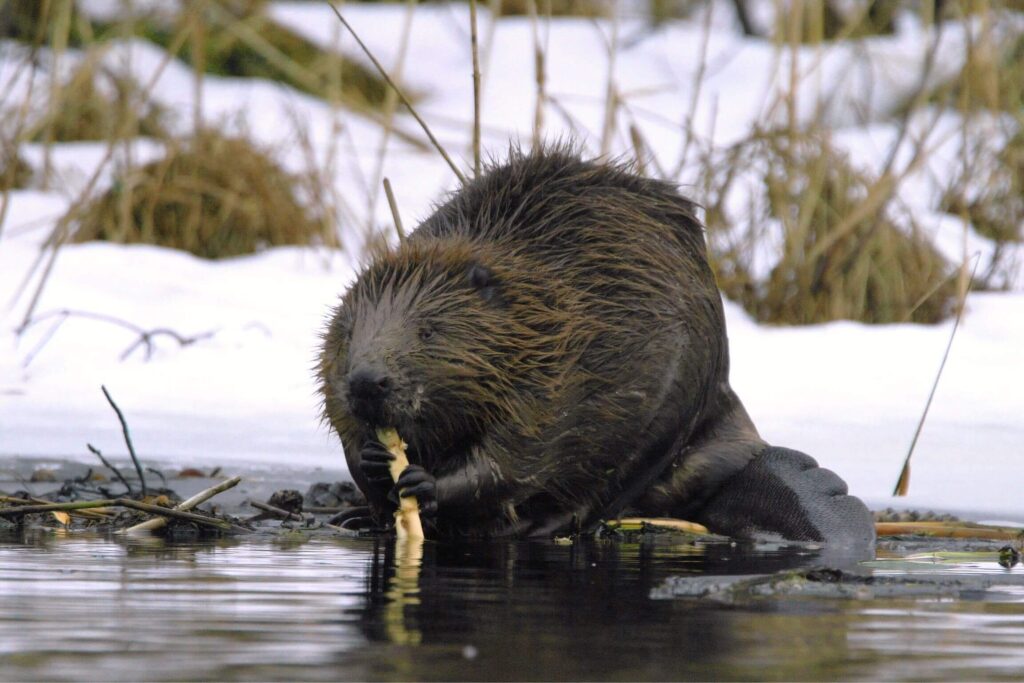
Eurasian Beavers are large, semi-aquatic rodents native to Europe and parts of Asia, known for their exceptional ability to alter their habitats by constructing dams, lodges, and canals. They’re herbivores, feeding primarily on the bark, twigs, leaves, and aquatic plants.
Once abundant in Britain’s wetlands, the European beaver was hunted to extinction in the 16th century due to its highly valued waterproof fur and scent glands. However, these incredible ecosystem engineers are making a comeback!
Thanks to several successful reintroduction projects, European beavers can now be found in parts of Scotland, Devon, and Cornwall. The Scottish Beaver Trial, which began in 2009, was a major milestone in their return to Britain. The beavers’ remarkable ability to create wetlands and improve biodiversity has been recognised, and they are now even a protected species in Scotland.
Eurasian Lynx
Where to potentially spot them in the future: Kielder Forest (Northumberland, England)

The Eurasian lynx, a large and elusive wildcat, vanished from the British landscape more than 1,300 years ago due to habitat loss and hunting.
Although not yet fully reintroduced, there are ongoing discussions and plans to bring back this majestic predator to certain parts of the country.
They’re a beautiful cat to look at: a sturdy body, relatively short legs, a short tail with a black tip and pointed, tuft ears. The coat is generally a yellowish-brown to grey-brown hue with white underparts and darker spots and stripes for camouflage in their natural forest habitat.
Organisations like the Lynx UK Trust are working to re-establish the lynx in carefully selected locations in the UK, such as Kielder Forest in Northumberland. The return of this agile hunter could bring numerous benefits, including controlling deer populations and boosting ecotourism.
Though the biggest challenge may well be convincing the general population that they’re non-threatening to humans.
White-Tailed Eagle (Haliaeetus albicilla)
Where to spot them: Isle of Mull (Scotland) and Isle of Wight (England)

The White-Tailed Eagle, or sometimes known as the sea eagle, is the largest bird of prey in the UK.
The body of a White-Tailed Eagle is characterised by a heavyset, robust frame, with a wingspan that can reach up to 8 feet (2.4 metres) across. An adult White-Tailed Eagle has dark brown plumage covering most of its body, with lighter, golden-brown feathers adorning its head and neck. The name “White-Tailed” comes from the striking white feathers on the eagle’s tail, which contrasts sharply with the rest of its dark plumage.
This magnificent bird went extinct in Britain in the early 20th century due to habitat loss, persecution, and poisoning. However, conservationists didn’t give up on this sky-soaring wonder!
Reintroduction projects began in the 1970s from Norwegian White-Tailed Eagles, chosen for their genetic similarity to the original British populations and because Norway has a healthy and thriving population of these birds.
Today, these impressive birds can be found in various locations in Scotland, particularly on the Isle of Mull. In 2019, the Roy Dennis Wildlife Foundation and Forestry England launched a reintroduction project on the Isle of Wight, with plans to establish a breeding population in southern England.
The Red Kite (Milvus milvus)
Where to spot them: Chiltern Hills (England), Mid Wales, and Central Scotland

Once widespread across Britain, the elegant Red Kite faced near-extinction in the 20th century due to persecution and pesticide poisoning. By the 1980s, only a handful of breeding pairs remained in Wales.
The Red Kite has a reddish-brown body, with white patches on the head and under the wings, and a deeply forked, long tail that helps it manoeuvre effortlessly in flight. Its wingspan ranges from 4.9-5.6 feet (150-170 cm), and it has a body length of about 24 inches (60 cm). The Red Kite’s dark, hooked beak and yellow eyes give it a fierce look, while its dark, finger-like wingtips and contrasting white patches make it easily distinguishable from other raptors.
Starting in the early 1990s, a series of reintroduction programs took place in England and Scotland. Today, Red Kite populations are flourishing, particularly in the Chilterns, where they have become a beloved bird life encounter in Britain for locals and visitors alike.
Large Blue Butterfly (Phengaris arion)
Where to spot them: Polden Hills (Somerset, England), Collard Hill (Mendip Hills, England), and other locations in southwest England
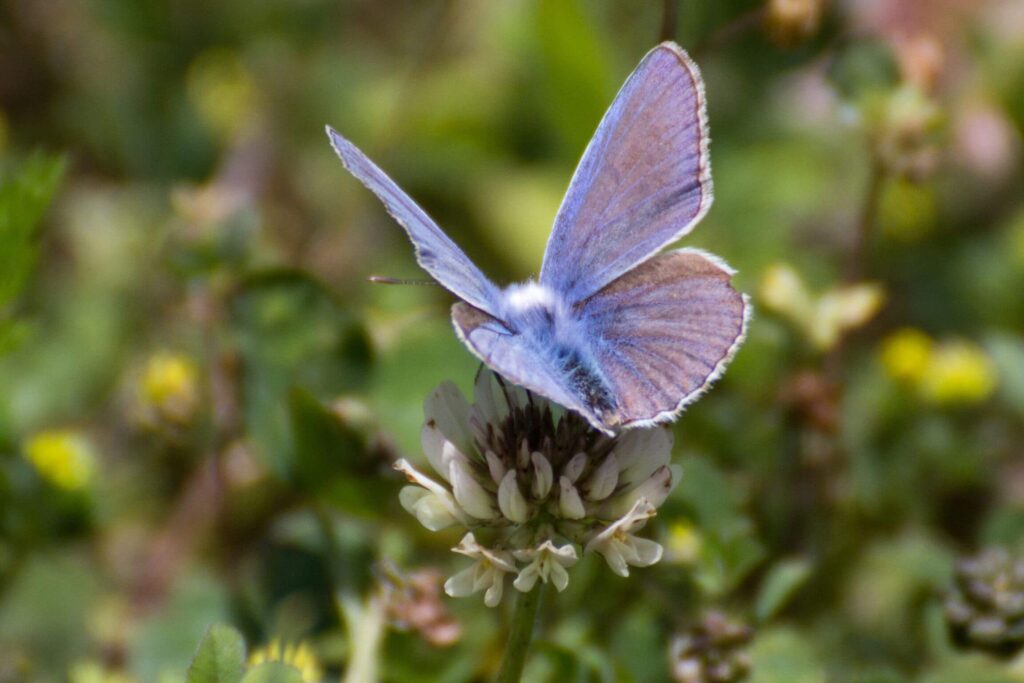
The beautiful Large Blue Butterfly is a fascinating tale of conservation success.
As their name suggests, males have a dusky blue colour at the top of their wings, while females exhibit a more muted shade. The wings have a distinct black border with white fringes, and on the underside, a unique pattern of black spots, white and brown-orange hues, with a prominent row of red-orange spots towards the outer edges.
The butterfly was declared extinct in Britain in 1979 due to habitat loss and changes in land management practices. However, its story doesn’t end there! In 1984, conservationists and scientists initiated an ambitious reintroduction program to bring the Large Blue Butterfly back to Britain.
Using caterpillars from Swedish populations, the project focused on improving and managing suitable habitats. This meticulous effort paid off, and the butterfly’s population began to recover.
Now, the Large Blue Butterfly can be found in well over 40 places across southwest England, including the Polden Hills in Somerset and Collard Hill in the Mendip Hills. This delightful insect’s resurgence is a testament to the power of conservation and community efforts.
Pine Marten (Martes martes)
Where to spot them: Scottish Highlands, mid-Wales, and Forest of Dean (Gloucestershire, England)

The elusive Pine Marten, a small and agile carnivore with a slender rich-brown coloured body, large rounded ears, and a bushy tail, faced a drastic decline in Britain due to habitat loss and persecution during the 19th and early 20th centuries. By the mid-20th century, Pine Martens were restricted to a few remote areas in the Scottish Highlands.
Pine Martens have a varied diet, consisting mainly of small mammals, birds, insects, and fruits. Some of their preferred prey include voles, mice, squirrels, and rabbits. They are opportunistic hunters and will also consume eggs, carrion, and occasionally reptiles or amphibians. During the autumn season, Pine Martens have a preference for fruits such as berries, which provide a rich source of energy to help them build fat reserves for the winter months.
Conservation initiatives and legal protection have aided the Pine Marten’s recovery. In recent years, Pine Martens have been reintroduced to Wales and England’s Forest of Dean, helping to re-establish their original place in Britain’s woodlands.
The Pool Frog (Pelophylax lessonae)
Where to spot them: Norfolk, England

The Pool Frog, Britain’s rarest amphibian, suffered a decline in population due to habitat loss, predation, and human intervention.
This charming green frog, with dark spots on its back and light stripes along its sides, was declared extinct in the UK in the mid-1990s. However, conservationists were determined to restore this amphibian to its native lands.
In 2005, a reintroduction project began in Norfolk, using Pool Frogs sourced from Sweden. Thanks to these efforts and ongoing habitat management, the Pool Frog has made a successful return to Britain.
This small, but mighty frog serves as a symbol of the importance of wetland conservation.
Eurasian Crane (Grus grus)
Where to spot them: Somerset Levels and Moors (England) and other wetland areas in the UK
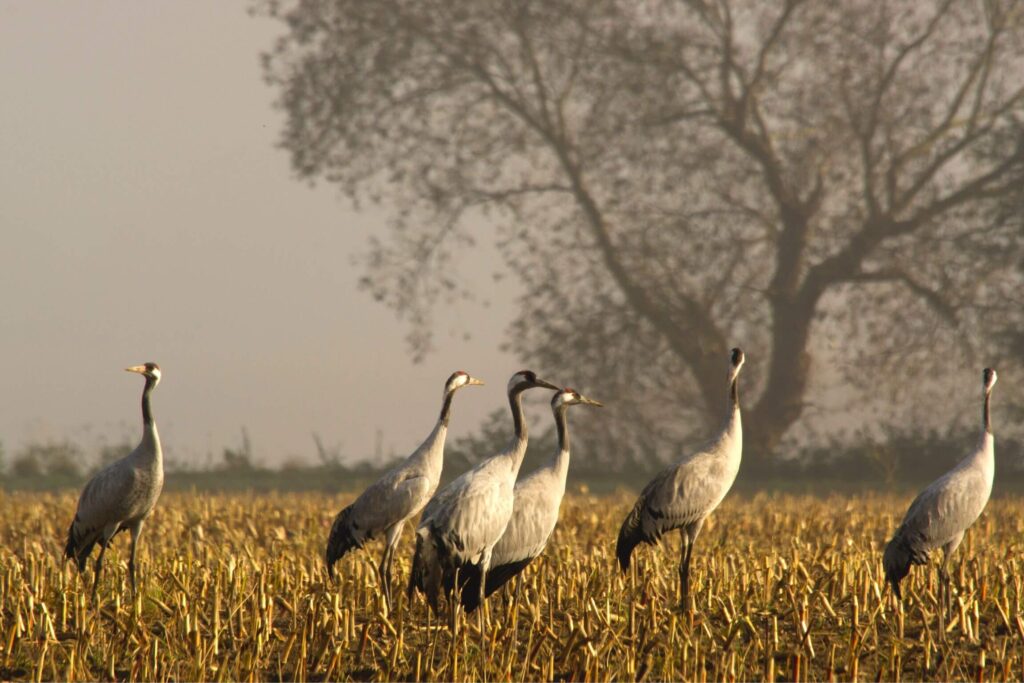
Eurasian Cranes, also known as common cranes, are tall, elegant white birds known for their impressive size, long legs, and slender necks. They disappeared from the British landscape around 400 years ago due to hunting and habitat loss.
Eurasian Cranes are known for their elaborate courtship displays, which involve synchronised dancing, jumping, and calling. These rituals help strengthen pair bonds and secure mating opportunities. They are monogamous and usually mate for life, building large nests in shallow water or wetland areas.
In 2010, the Great Crane Project was launched with the aim of reintroducing the Eurasian Crane to Somerset.
Captive-bred cranes were released into the wild, and they have successfully established a breeding population in the region. These birds can now be found in the Somerset Levels and Moors and have begun to disperse to other parts of the UK.
These success stories of once extinct British wildlife brought back to our lands remind us of the importance of preserving and restoring our natural habitats to ensure their continued existence.
As you explore the British countryside, keep an eye out for these remarkable creatures that have made an inspiring comeback to their native lands. Happy wildlife watching!