
The market town of Knaresborough in North Yorkshire, boasts many must-see attractions, including historical landmarks like Knaresborough Castle and Mother Shipton’s Cave, along with natural wonders such as the River Nidd and the striking Nidd Gorge. Here’s how to take yourself on a walking tour of Knaresborough, so you can see it all in under 8km.
“There’s not really much to do indoors in Knaresborough”, the lady at the visitor centre admits, as we huddle looking at leaflets to shelter from the cold December downpour.
I guess it’s a good job we’re not shy of pushing our waterproofs to the limits.
Grabbing a homemade-looking ‘Historic Trail of Knaresborough’ leaflet, we set off on our soggy walk around the sights.
It’s not my first time in Knaresborough and so I know my way around quite well, especially as most of the key sights are together at the eastern side of the River Nidd. That being said, it was well and truly time to get reacquainted with it, and in my opinion, there’s no better way to explore somewhere than by foot. Even in non-stop rain.
This 6-8km (3-4 mile) self-guided walking tour of Knaresborough took us around two and a half hours at a leisurely pace. We mainly followed the trail on the leaflet, with diversions into quaint shops and St Robert’s Cave. Of course, we stopped at a cafe for a hot coffee too!
So if you’re looking for a walk that takes in all the highlights and points of interest in Knaresborough, then this self-guided walking tour is for you!
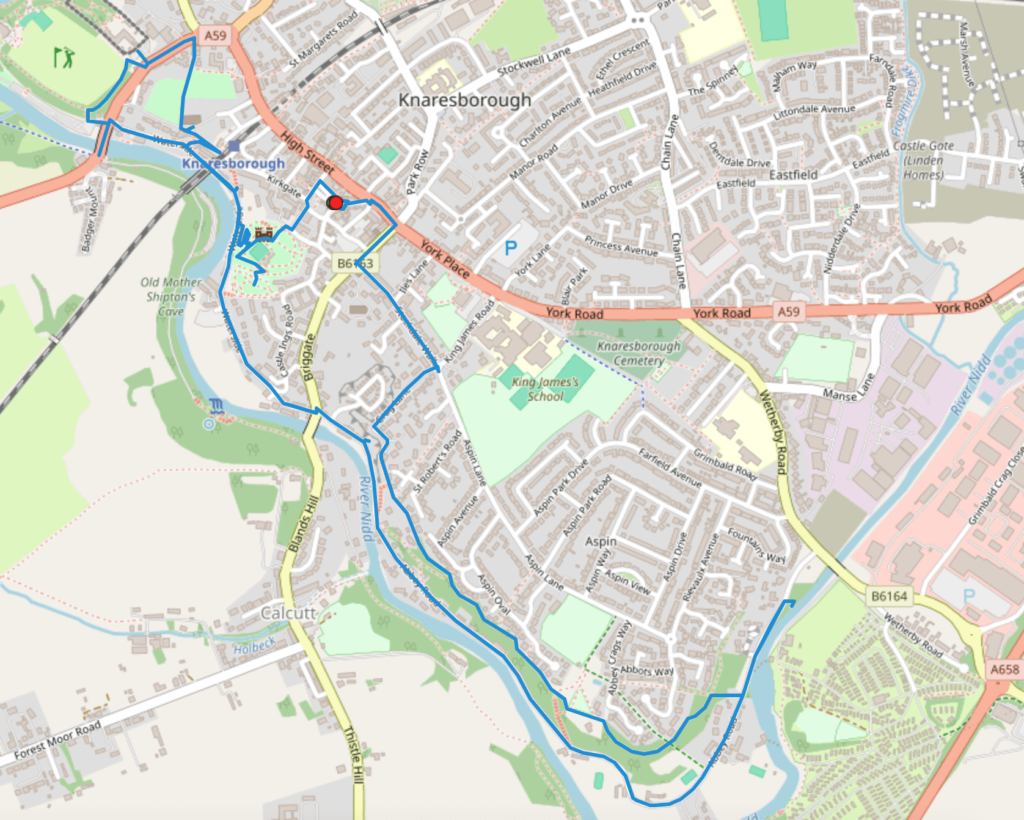
- Walking Tour Mapped Route
- 1. Knaresborough Market Place
- 2. Knaresborough Castle
- 3. The Famed View of the Nidd Gorge
- 4. Waterside
- 5. St John's Church
- 6. Knaresborough House
- 7. Back into Town (or Mother Shipton’s Cave)
- 8. Chapel of Our Lady of the Crag & House in the Rock
- 9. Wooden Sculptures & St Robert's Cave
Walking Tour Mapped Route
1. Knaresborough Market Place
A great place to start the historic walk is in the ancient town centre, first mentioned in recorded history in 1206. A town of now around 15,000 people, markets have been held here every Wednesday since at least 1310, when this day was fixed by a charter granted by Edward II.
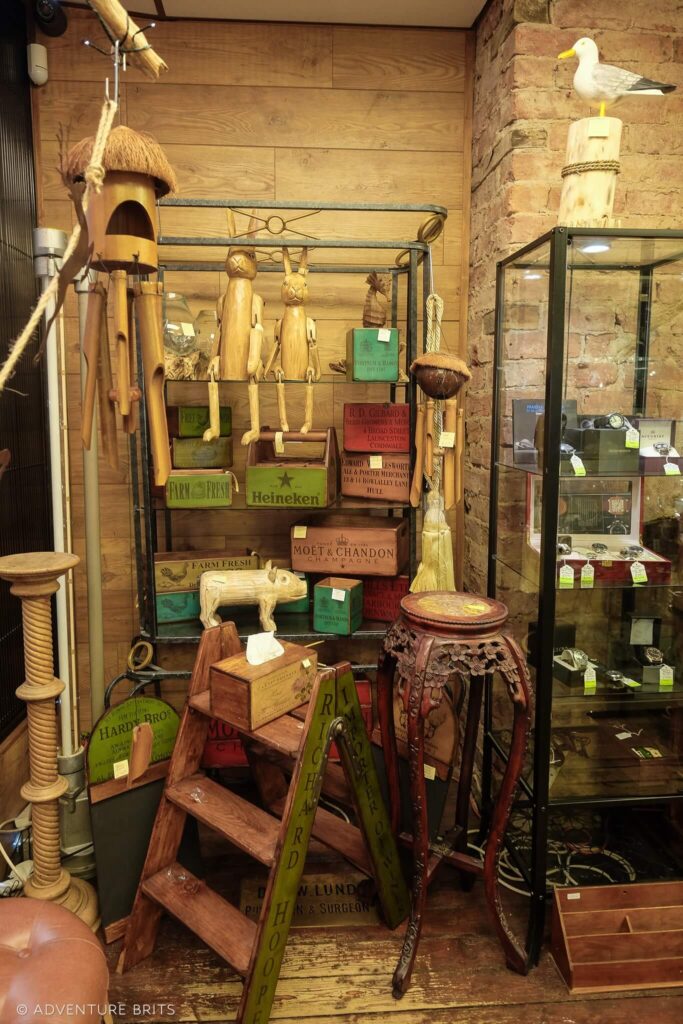
There are plenty of shops to check out, including multiple charity shops and a very cool antique shop we loved called Donkey’s Years Antiques.
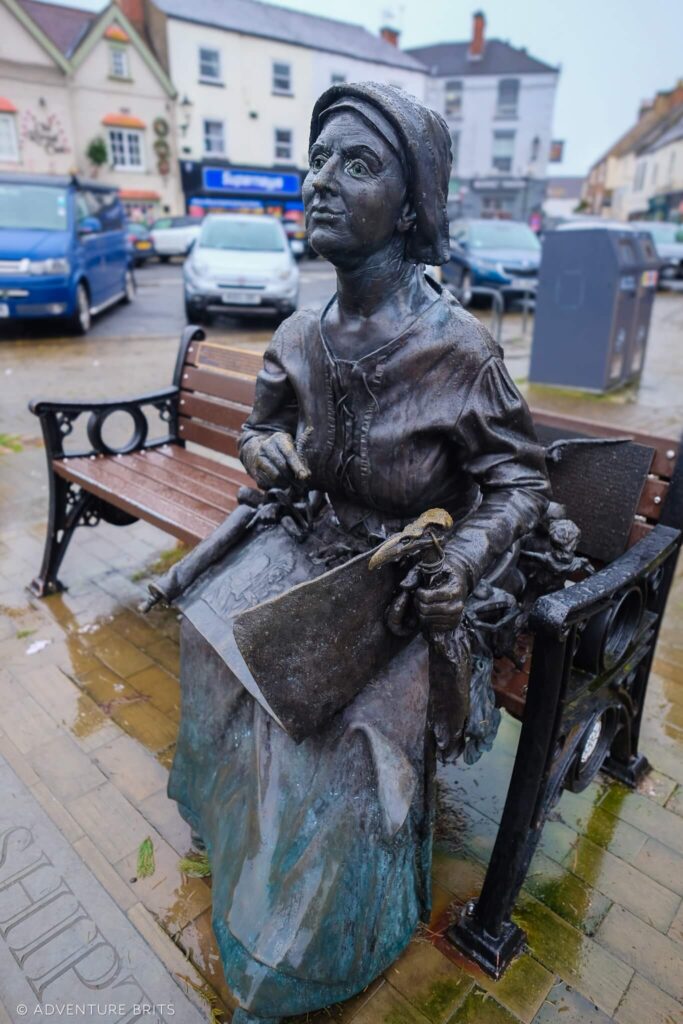
Circling the market cross are remnants of the early cobbles, surrounded by benches with seated sculptures showcasing two of the town’s most famous people; Mother Shipton, an English soothsayer and prophetess according to English folklore and Blind Jack Metcalf, who despite blindness, became a prolific road builder.
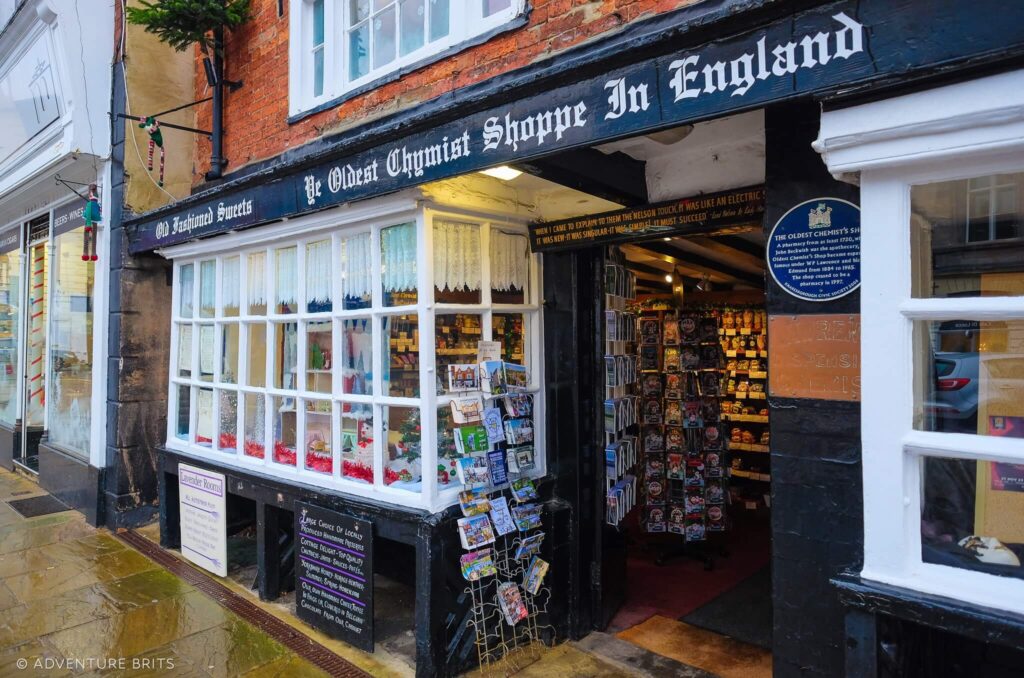
Once you’ve read the information and taken some snaps, just behind you is Ye Oldest Chymst Shoppe. As the name suggests, it’s the oldest chemist in England which was in continuous use as a pharmacy from 1720 until 1997. Now it’s a cute gift shop selling everything from handmade soaps to counter chocolates with the quaint Lavender tea rooms situated upstairs in the historic rafters.
2. Knaresborough Castle
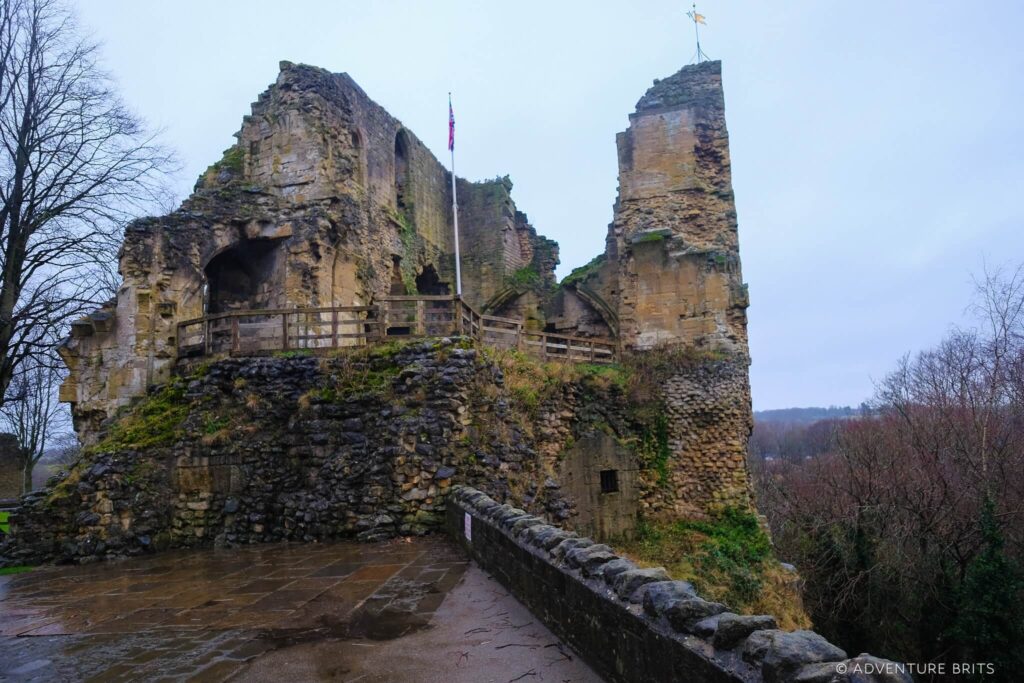
Turning right out of the door of Ye Oldest Chymst Shoppe, hook a left at the road, walking past Knaresborough Library towards Castlegate.
You’ll see Knaresborough Police Station around the corner, where you’ll need to walk through the gate between it and the Castle Inn. Continue straight into Castle Yard and enter the castle grounds to your right.
Knaresborough Castle is now a ruined fortress, initially built by the Normans who recognised the fantastic natural defence provided by the rocky promontory above the river Nidd. The earliest written evidence of the castle dates from the reign of Henry I (1100 to 1135).
The castle has endured two sieges. First, in 1317, supporters of the rebel Earl of Lancaster seized it. Later, in 1644, the Battle of Marston Moor, one of the largest battles ever fought on English soil, marked its second siege, ending royalist control in northern England.
It’s free to walk around the ruins but there’s an entry charge for the interior remains. In summer, Knaresborough Castle, including the Keep, is open Wednesday to Sunday from 10am until 4pm. In winter, only the Courthouse Museum is open Wednesday, Saturday and Sunday 10am until 4pm.
3. The Famed View of the Nidd Gorge
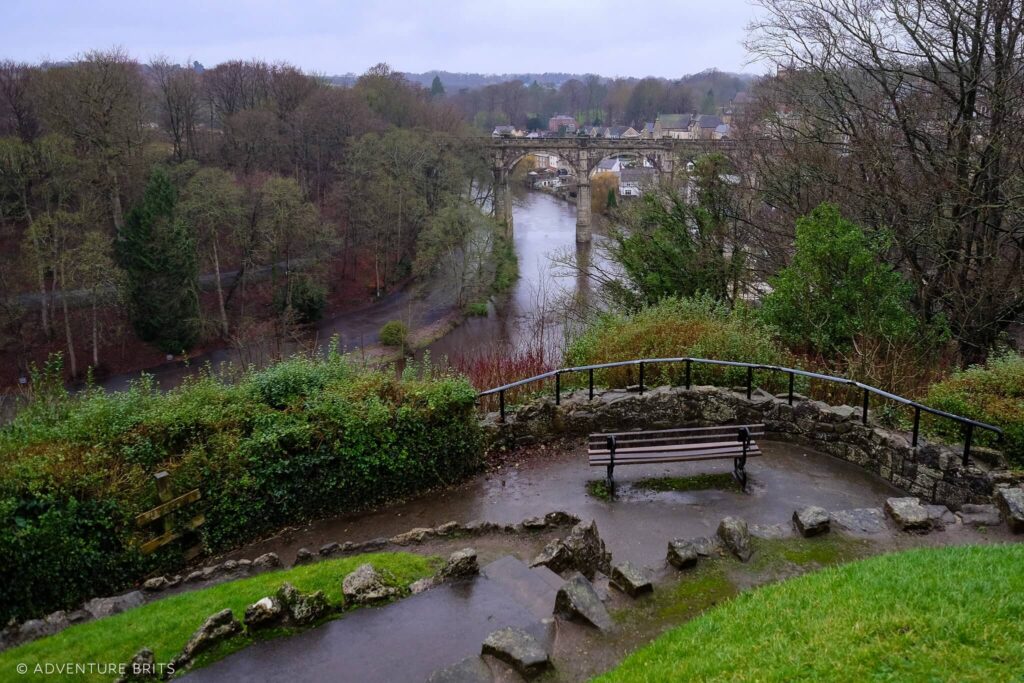
Whilst you’re looking around the castle ruins, you’ll do doubt spot the stunning and most iconic view of Knaresborough – the railway viaduct straddling the river Nidd, with the tiered old town on the bank some 120 feet below.
Fascinatingly, the viaduct you see was actually rebuilt in 1851 after the original one collapsed, which dammed the river, causing it to rise by 12 feet and the lime in the mortar killing all the fish!
Walk to the war memorial in the castle grounds where there is also a nice view of the weir and Castle Mill below. It was originally built in 1791 as a cotton mill, later adapted for local flax and then linen.
Retracing your steps a few metres, take the winding path down to the riverside path, otherwise known as Waterside.
4. Waterside
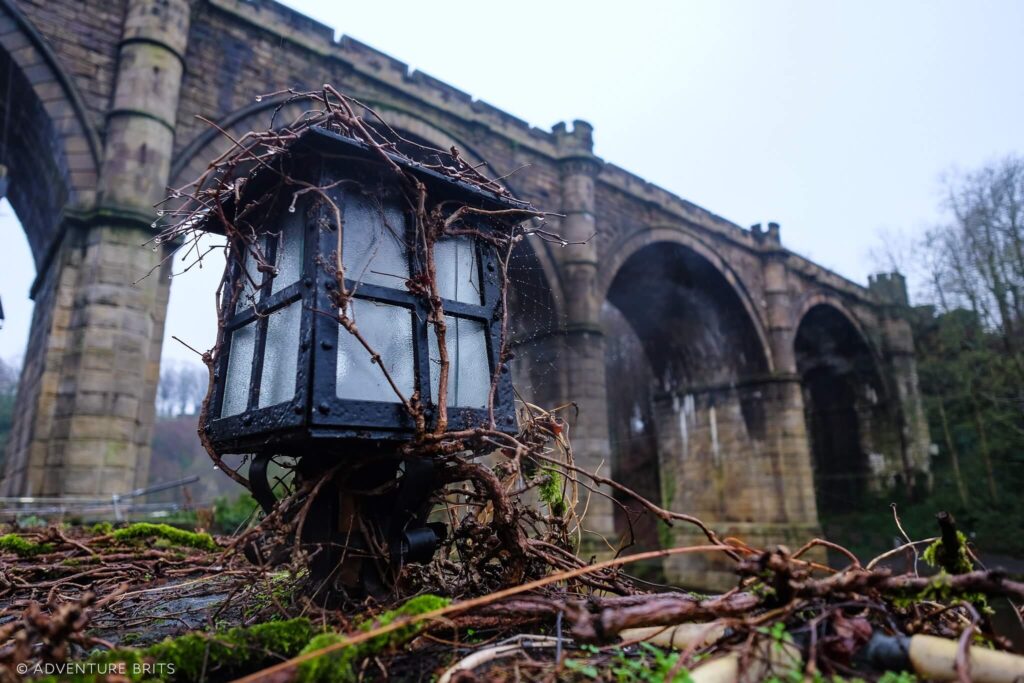
At the bottom of the steps, turn right along the river path, heading towards the viaduct. To your right just before the viaduct arch, you’ll pass the Old Dye House – all that remains of Knaresborough’s oldest industrial building.
Just past the viaduct, notice the Old Manor House to your left with its distinctive black and white chequered paintwork. This wooden-framed Grade II listed building served as King John’s hunting lodge. Notably, a 400-year-old mulberry tree in its garden still bears fruit annually, according to the blue plaque on the wall anyway.
Almost opposite the Old Manor House is the thatched Manor Cottage which is possibly the oldest residential house in Knaresborough.
Beside the cottage is where you need to turn right up the cobbled street of Water Bag Bank, named so because some of the town’s water was once carried up here in leather bags via horseback.
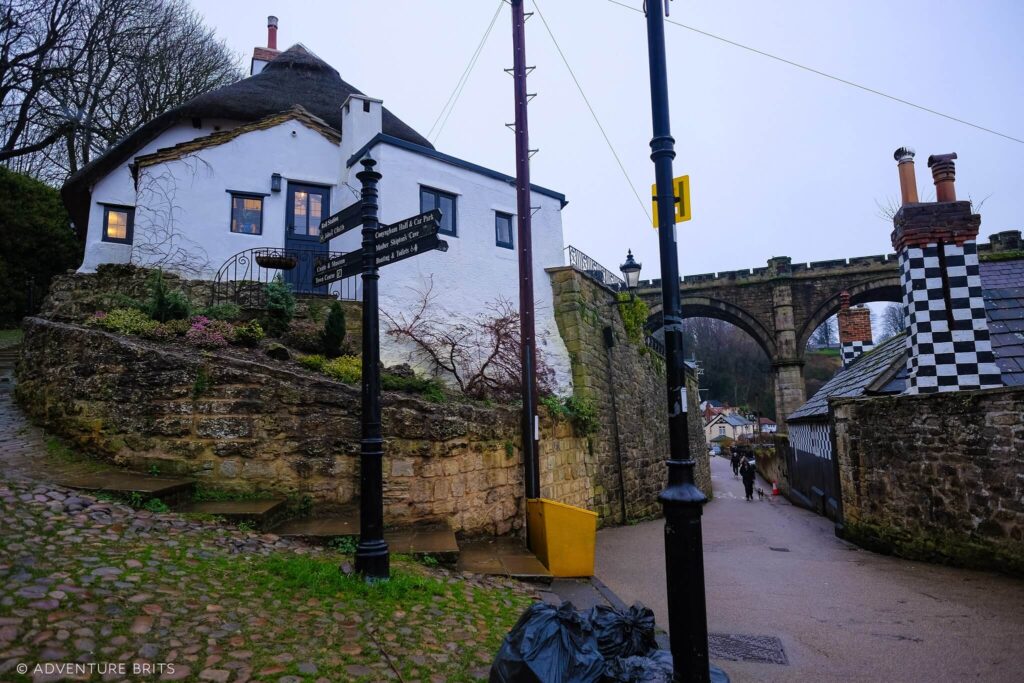
At the top of Water Bag Bank, turn a sharp left (almost back on yourself) into the grounds of St John’s Church.
5. St John’s Church

St John’s is a large and handsome grade I listed church, dating from around 1100, with a ‘candle snuffer’ spire and old clock face which was erected in 1884. Pop inside if you can (it was sadly closed on this visit) to admire the mixmash of architecture from the 12th to the 17th century.
Leaving through the church doors, hook a sharp right to walk directly around the church, along Church Lane. Take the second gate on your right (i.e. not the graveyard gate), into the grounds of Knaresborough House.
6. Knaresborough House
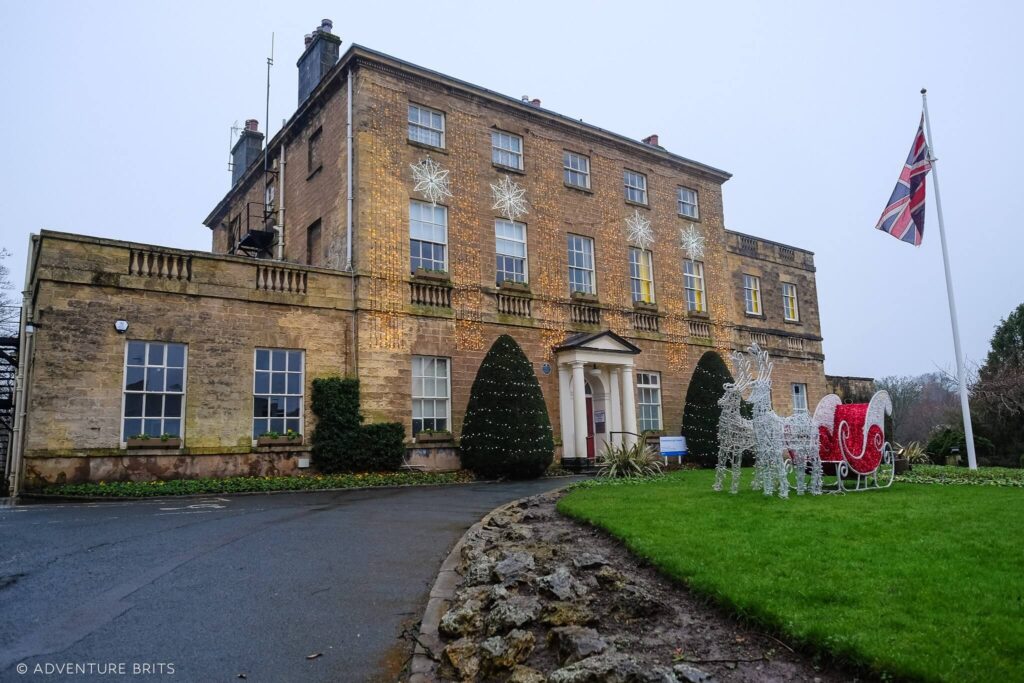
Admire the stately views of Knaresborough House for a few moments. Now a council building, it was believed to have been built in 1768 by John Carr of York for the Collins family. Thomas Collins, the Vicar of Knaresborough resided there and then after his death, Lady Evelyn Collins, the cousin of Winston Churchill.
If you’ve got kiddos with you, there’s an outdoor gym at the bottom where you enter, which would be fun for them to play around with for a short while.
Walk back out of the gate and continue up the road, or walk past the outdoor gym and through the gate on your left.
7. Back into Town (or Mother Shipton’s Cave)
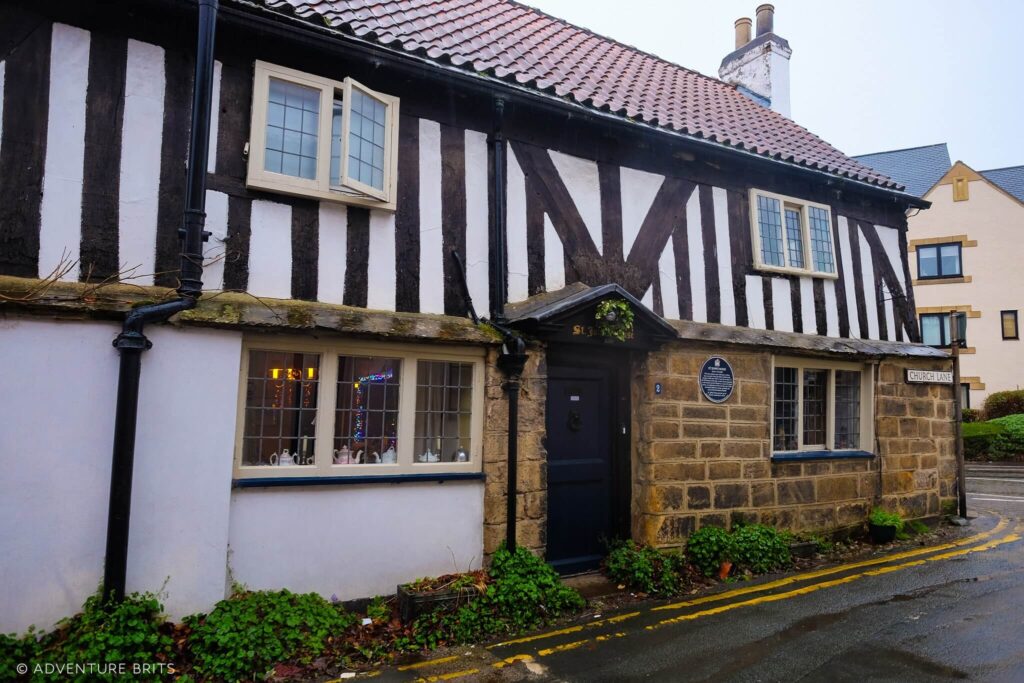
At the end of Church Lane, you’ll see St John’s House on your left, a pretty and well-preserved Tudor house, once home to a senior priest appointed by York Minster as a reward for loyal service. A confession of sins from the early 1500s was even found hidden within a beam.
Across the road is Henshaw’s Arts and Crafts Centre for the visually impaired, where there’s a shop open Monday to Friday, 9am-5pm, selling all range of handmade crafts such as jewellery, cards, homeware and garden accessories. It’s worth popping in if it’s open. There’s also a cafe.
Leaving Henshaw’s Arts and Crafts Centre, take the tree-lined path parallel to the road through the park between a couple of wood sculptures. Then take a left down some stone steps to the road. You’ll pop out just next to the public toilets, opposite the Ugly Duckling Tearoom.
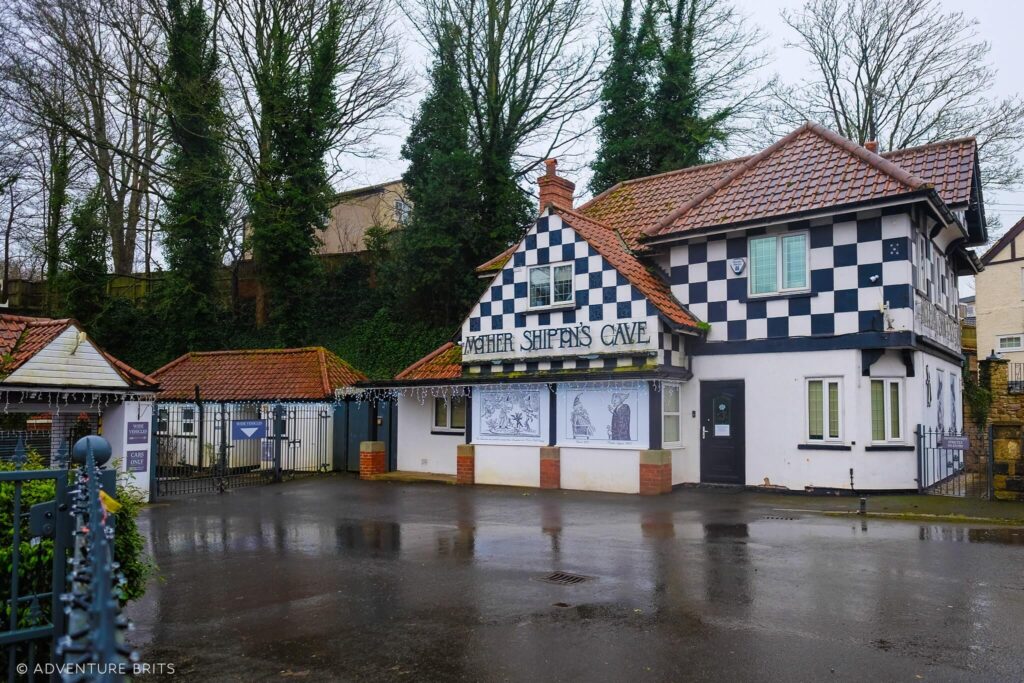
If you want to visit Mother Shipton’s Cave – England’s oldest visitor attraction – now is your chance. Keep in mind, it’s sadly closed in winter. Walk left to the main road and take a right across the bridge, to the black and white chequered visitor entrance.
Otherwise, just head back along Waterside, taking the small road to the right of the World’s End pub. Walk past the rotary club wishing well and admire the cute houses built into the rock, including the rather unusual garages for their cars!
Walk back the way you came along Waterside, passing under the viaduct again.
8. Chapel of Our Lady of the Crag & House in the Rock

The next stop on this walking tour of Knaresborough is an out-and-back walk along the famous Abbey Road. To access this lovely historic walk along the river, continue to the end of Waterside, carefully cross the intersecting B6163, and take the road opposite.
After about 100 metres on Abbey Road, look up high to your left and you’ll see a castle-looking house carved from the rock, built by a linen weaver between 1770 and 1791. This architectural wonder was once a popular tourist attraction, but it’s been a private residence since 2000 so sadly you can only admire it from the outside.
A couple of metres further down is Chapel of Our Lady of the Crag, an early 15th century chapel carved into the sandstone of the river gorge cliff face by John the Mason in 1408, with special permission from King Henry IV.
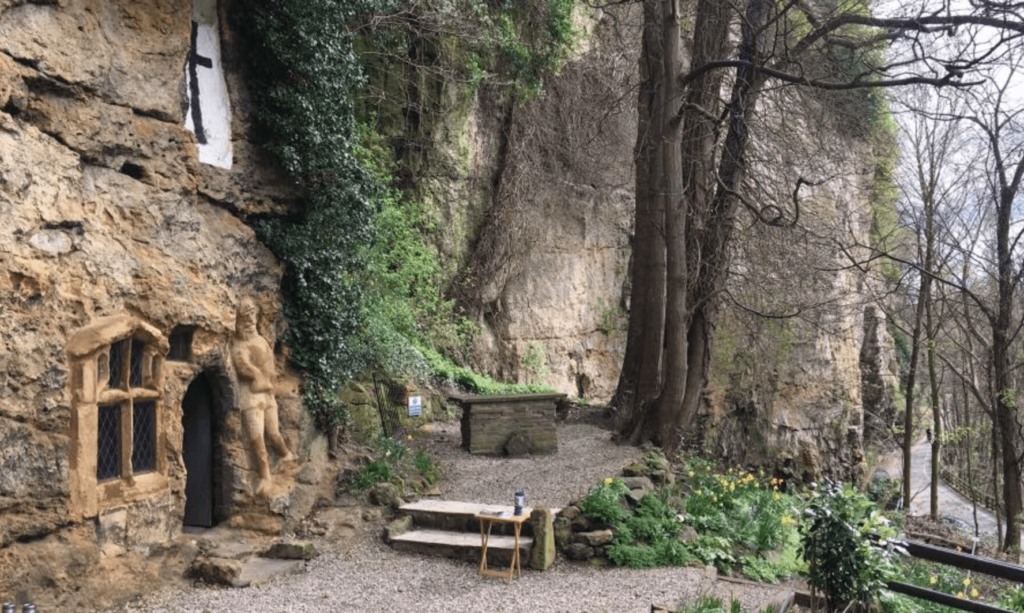
The enchanting chapel was believed to be a wayside shrine for pilgrims walking between the town and the Priory, as well as a place of prayer for men working in the quarry nearby. It’s such a unique spectacle.
Unfortunately the Chapel of Our Lady of the Crag is only open to visit between 2pm – 4pm on a Sunday (it’s run by volunteers), which is a real shame. Every time I have been, I’ve never had the opportunity to look inside!
If you can, time it so you do this self guided walking tour of Knaresborough late on a Sunday morning, so you can visit inside the chapel after lunch!
9. Wooden Sculptures & St Robert’s Cave
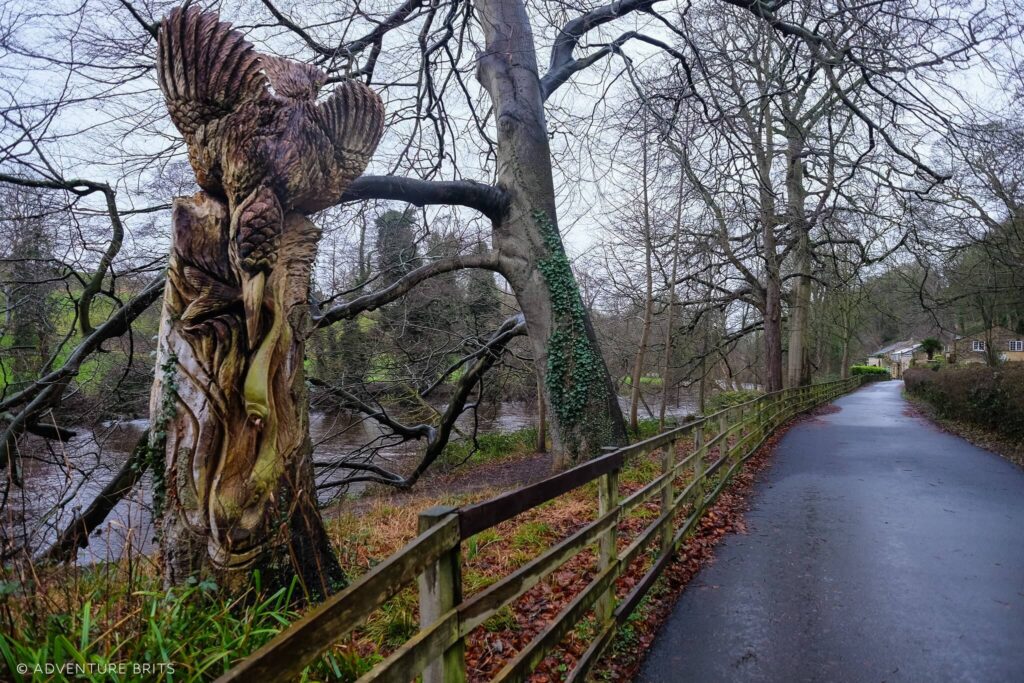
As you continue walking along Abbey Road, keep an eye out for an array of intriguing sculptures, hand-carved into tree stumps by chainsaw artist Tommy Craggs.
From a stunning kingfisher with its lunch in its beak, to a small dragon, the Knaresborough sculptures are creative and such a joy to discover amongst the foliage – no matter what your age!
Continue on Abbey Road for another mile (around 20 minutes), to St Robert’s Cave which you’ll find signposted off the road to your right. Admire the gorgeous stone houses and orchards as you pass by them on the way.
St Robert’s Cave is an intriguing point of interest and holds an incredible story too. Robert of Knaresborough once lived much of his life as a hermit in this very cave beside the river, having been intent on pursuing a religious vocation since he was a child. The cave is an extremely rare surviving example of a mediaeval hermitage, even including a living area and seating benches.
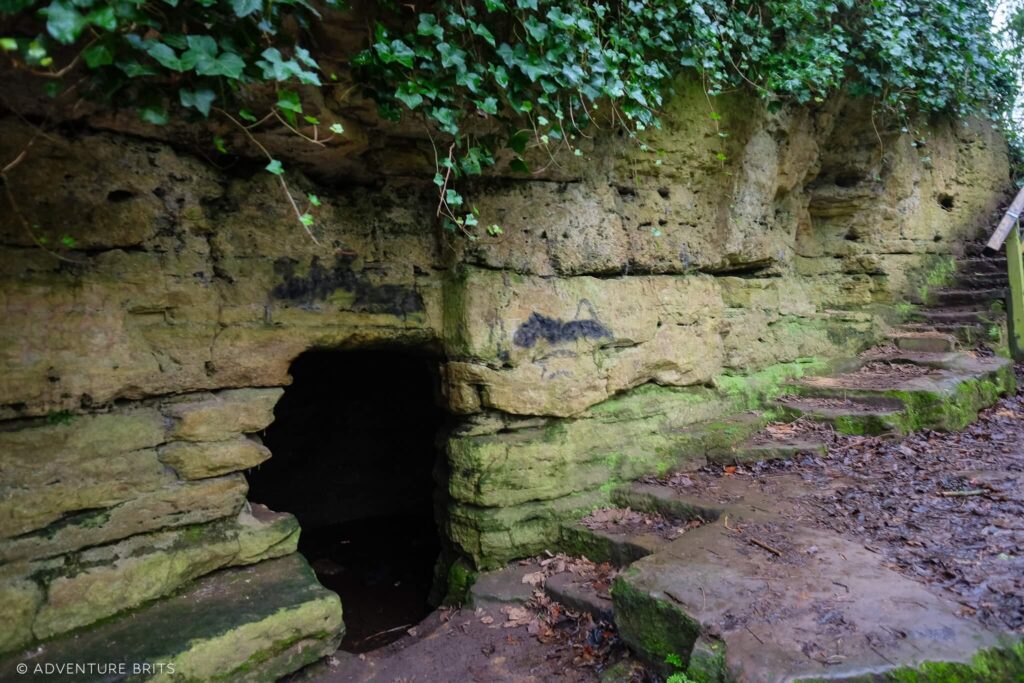
In 1252 Robert was recognised as a saint by the Catholic church, and his cave and chapel became a popular site of pilgrimage prior to the Reformation.
Once you’re content with having seen everything you want to at St Robert’s Cave, head back the way you came and back to your car, or back into the town.
If you’re going back into town, take the footpath to the right up the bank, called Crag Top. This is instead of walking back along the road again as this route will give you nice views, and reveal more carved sculptures and even some street art.
And that’s a wrap!
This self guided walking tour of Knaresborough, taking in all the main attractions and iconic views, is a fantastic way to get to know this stunning North Yorkshire market town.
The next time you’re in North Yorkshire, why not trace the steps of history with this self-paced and self-guided tour?
I love walking around visiting towns that have a lot of history. And Knaresborough looks like one I need to visit very soon.
What a wonderful stroll! So much history to know in such a short jaunt!
Sounds like an epic walking tour! I like that so much can be covered on foot, definitely something right up my alley!