
A flat patch of grass is all you need to pitch a tent, right? Wrong. Make sure you consider all of these handy tips about where to pitch a tent in the UK, so you can ensure that you have a comfy and stress free kip.
Finding the perfect spot to pitch a tent is an art. And it’s one of those things you don’t realise until you get it wrong, it’s 3am and you’re full of regrets.
There’s so much more to it than simply finding a flat grassy patch with an impressive view to call home for the night, trust me. I’ve had my fair share of camping mishaps over the years. Waking up drenched in a soggy puddle and getting moved on by an angry local in the middle of the night, are just two scenarios that spring to mind. I’ve once even had to literally dig myself out of a white barricade while snow camping because I totally misread the wind direction.
Luckily, I’ve learnt a few things since then.
In short, the perfect place to pitch a tent combines practicality, safety, intuition and a dash of local knowledge too. A thorough assessment of the pitching location really is everything to ensure you have a safe and comfortable camping trip. No one likes a night of tossing and turning.
So if you want to check that your knowledge is up to scratch, here are 12 tips to help you choose where and how to pitch a tent for an enjoyable outdoor adventure under the stars.
- 1. Check it's Legal – Understand the Law
- 2. Check for Level & Solid Ground
- 3. Inspect the Ground for Hazards
- 4. Look Up & Seek Appropriate Shelter
- 5. Leave Enough Space for Guy Ropes
- 6. Consider Water Source Proximity
- 7. Check Campfire Proximity
- 8. Think About the Sun
- 9. Assess Mobile Reception
- 10. Respect the Environment & Look for Signs
- 11. Consider Proximity to Amenities
- 12. Trust Your Instincts
1. Check it’s Legal – Understand the Law
Wild camping, the practice of pitching a tent in the countryside away from a formal campsite, varies significantly across the different countries in the UK, as each has its own rules and guidelines.
Understanding these distinctions is crucial for anyone looking to embark on a wild camping adventure, before you get your heart set on an epic pitch.
Scotland has a more lenient approach to wild camping due to the Land Reform Act 2003, allowing responsible wild camping on most unenclosed land. However, areas like Loch Lomond have specific bylaws restricting camping, so check local regulations beforehand.
In England, Northern Ireland and Wales, wild camping is generally not legal. You’ll often need the landowner’s permission, except in some parts of national parks, such as Dartmoor National Park in Devon – the last place in England where you can wild camp.
2. Check for Level & Solid Ground
Let’s start with another basic: a flat spot is essential for a comfortable sleep. Simple as.
Avoid areas on a slope or at the bottom of a slope. You may not realise it at first until you step back and do a 360 degree walk around to assess the surrounding topography.
Otherwise, if it rains overnight, you may well wake up in a waterlogged pool. And pitching your tent at the bottom of hills or valleys is also where cold air settles at night, which is not ideal in already cold conditions.
Remember, even a slight incline can be noticeable when you’re trying to sleep. If a slight slope is unavoidable though, just pitch your tent with your head at the higher side, so the blood doesn’t rush to your head at night.
3. Inspect the Ground for Hazards
Soft grassy areas might seem appealing, but they can also hide rocks, roots, uneven ground and even other hazards like glass or metal wire. A little scouting can save you a night of discomfort or damage to your tent.
Walk around with good shoes on (like walking boots) at the spot you’re thinking of pitching on, to ensure there’s nothing underfoot that will be an issue.
Also, make sure the ground isn’t too hard – driving tent pegs into rock-hard soil can be a challenge. If it’s appropriate, remember to bring a mallet just in case.
4. Look Up & Seek Appropriate Shelter

When I camped in Australia we called Eucalyptus trees ‘widowmakers’ as they have a tendency to drop healthy looking limbs without warning. It’s now left me with a bit of PTSD! So while trees can provide shelter while camping in the UK, I’d advise against pitching under them unless other natural windbreaks such as small bushes or hillocks are not available.
If not, just be especially cautious about pitching under or near dead trees or trees with dead limbs. They should look healthy and stable. The weather should be an indicator of whether it’s wise to pitch under trees as well. Of course in high winds, heavy rain or storms, it’s a no-no.
Pitching at the top of a hill somewhere super exposed is also not wise as you’ll get battered by the elements, especially wind.
When it comes to finding the appropriate sheltered place, check the wind direction before you go or before you pitch. Bring a compass or use a compass app to help you to work out the wind direction at your site.
Ideally the feature, be that a rocky outcrop, knoll or bush, should face the direction of the wind, so you can pitch behind it to stop you from getting the wind head-on.
5. Leave Enough Space for Guy Ropes
Ensure the spot you pick has enough space to stake out your tent’s guy ropes properly, away from other tents or any natural obstructions. By using the guy ropes and securing them tightly, it will prevent the outer rain fly touching the inner fly, causing leakages if it rains.
If camping on sand or snow, you’ll need specialist tent pegs like these U-shaped sand/snow pegs.
6. Consider Water Source Proximity
When considering where to pitch a tent, being near a water source can be convenient, especially if you are on a multi day hike and want to keep carrying litres to a minimum.
Ensure the water source is clean if you plan to use it for cooking or drinking though, and of course always boil or use other purification methods before use.
However, it’s important to not pitch too close to water like lakes or streams, to avoid insects like mosquitoes and the risk of flooding.
7. Check Campfire Proximity
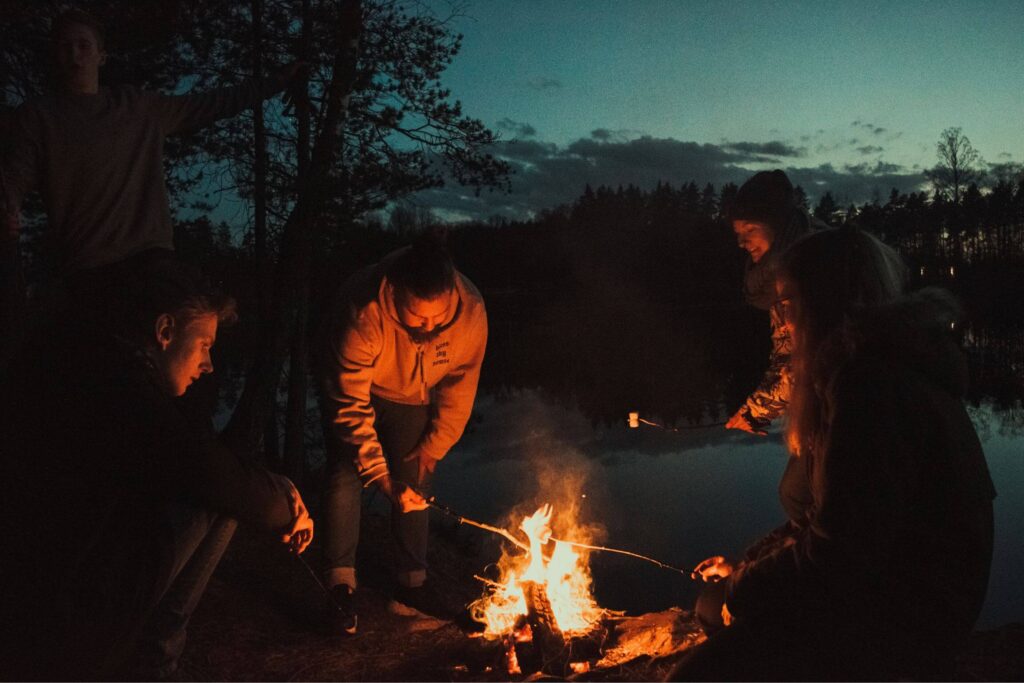
There’s nothing quite like a campfire. It’s simply one of the joys of camping, offering warmth, light, and a classic wholesome outdoor atmosphere. However, they also pose significant risks to you and your tent, including the potential for uncontrolled wildfires, especially in dry conditions.
In campgrounds you should use the provided fire pits or designated areas only. With wild camping, fires should be small, under control, and monitored at all times.
It’s important to not pitch your tent too close to any fires or fire pits as tent fabric is often highly flammable or could melt. And besides, a tent full of smoke is not the most pleasant experience either.
8. Think About the Sun
Thinking about the sun might not be the first thing that comes to mind when you’re eager to set up your tent but trust me, it can make a significant difference in your overall experience.
If you’re someone who loves waking up with the first light of dawn, orient your tent to face east. This way, the morning sun will gently wake you up, filling your tent with soft, warm light. It might also be a good idea if the weather is cold, so your tent warms up and moisture can evaporate instead of being stuck in the cold shade all morning.
On the other hand, if you’re not a morning person and prefer to sleep in, positioning your tent to minimise eastern exposure can give you those extra precious moments of sleep. During the summer months, the sun rises quite early in the UK, so this consideration becomes even more important.
9. Assess Mobile Reception
While the idea of disconnecting from the world is appealing and why many people go camping in the first place, having mobile reception can be crucial in emergencies.
Check your phone’s signal strength before settling down. Or, at the very least, know where you can walk nearby to get reception, access a public phone or to seek help.
10. Respect the Environment & Look for Signs
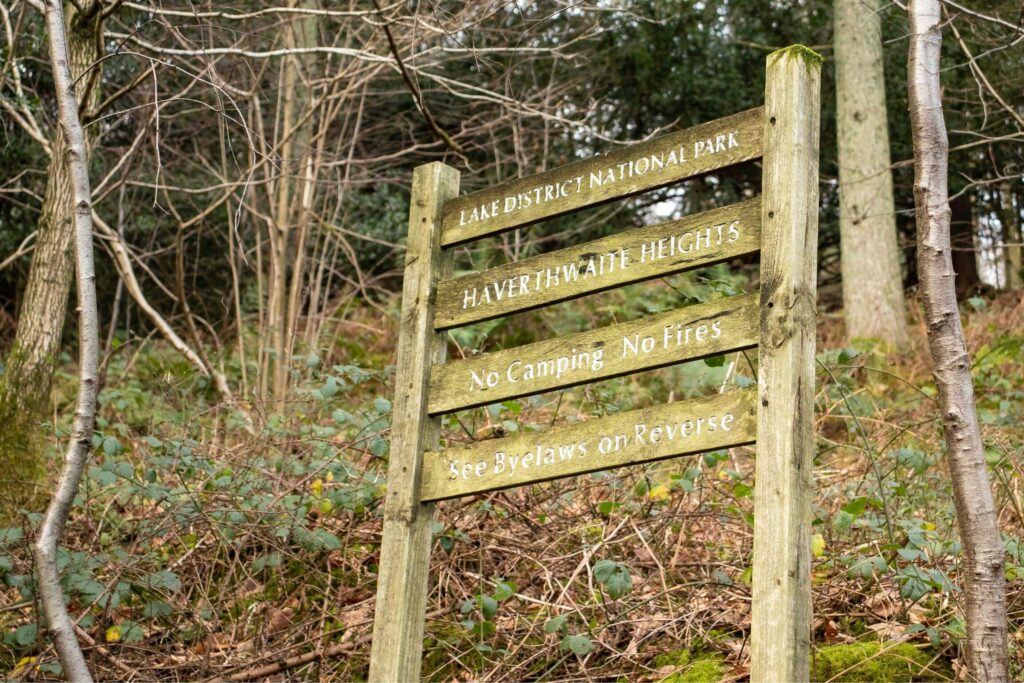
Stay away from areas that might be home to protected wildlife or plants which could be indicated by signs, information online or at a local tourist centre.
If you’re wild camping, also look out for any signage that might indicate private property, restricted areas for camping, or potential hazards.
Respecting these signs not only keeps you safe but also ensures you’re camping legally and won’t get an angry farmer or park ranger waking you up in the night!
It goes without saying but always follow the ‘Leave No Trace’ principles – your campsite should look as untouched as possible when you leave with any rubbish taken with you and any makeshift fireplaces dismantled.
11. Consider Proximity to Amenities
Being close to toilets at a designated campground can be convenient if you’re the kind of person who gets up in the night to pee. However, being too close means more foot traffic, noise and possibly unpleasant smells.
I do think being a little further away from the facilities at campgrounds has its benefits. If I arrive at the campsite late, I’ll be sure to do a test run to the facilities so I can ensure I will know my way in the dark.
12. Trust Your Instincts
Finally, trust your gut – it’s a very powerful indicator if something isn’t quite right.
If a place feels off, you’re not sure about the weather or generally have an inkling of concern over your safety, it’s OK to move on. And if that’s in the middle of the night, then that’s how it needs to be. Your comfort and safety are paramount.
So there you have it! The perfect camping spot is not just about the view (though that’s a big plus), it’s about a harmonious balance of knowledge and respect of the environment. Happy camping!