
Did you know that there are many poisonous berries in the UK which can be harmful or even deadly when ingested? If you want to learn which ones to avoid when out in the countryside or whilst foraging, get acquainted with these 8 toxic plants.
When you think of berries, you might conjure images of summer picking, juicy plump hedgerow treats, and jam-making. However, not all wild berries are a sweet delight. The UK is home to some of the most toxic and dangerous berries known to humans.
From the hauntingly named Deadly Nightshade to the festive yet fatal Holly, these berries are indeed beautiful, but also deadly.
If you’re a foraging newbie, it really is wise to learn about the most poisonous berries in the UK, so you can be sure to clearly identify, and avoid them.
Here’s a guide to some of the most poisonous berries found across the British Isles, the dangers they pose, and where they’re most likely found.
Yew (Taxus baccata)

The Yew tree is a symbol of immortality, but its berries and foliage are anything but life-giving.
The berries are soft, with a red cup-like structure known as an aril, which encases a dark seed. While the aril is not toxic, the seed inside is highly poisonous, containing toxic alkaloids.
Some people carefully extract the seed in order to eat the red flesh, however it’s not worth the risk. And anyway, from what I’ve heard, some people say the texture is snotty and the flavour underwhelming.
Symptoms of ingestion of the toxic parts of the tree can include dizziness, dry mouth, dilation of pupils, weakness, and heart problems. Sadly, a kid recently died from eating the fruits and leaves of a Yew tree.
Yews are commonly found in churchyards and can live for thousands of years.
Lords and Ladies (Arum maculatum)

Also known as Cuckoo Pint, this plant produces spike-like structures called spadix, surrounded by a hood-like leaf. The berries are bright red or dark orange when ripe in the Autumn and are clustered tightly.
Although loved by birds like blackbirds and thrushes, both ingestion and skin contact with the plant’s juice can be harmful to humans, causing intense irritation and swelling.
This plant is a valuable perennial for shady areas and spreads easily. It’s commonly found across the country at woodland edges, along hedgerows and on uncultivated ground.
Deadly Nightshade (Atropa belladonna)

As the name suggests, Deadly Nightshade is one of the most notorious and toxic plants found in the UK and Europe.
It’s a perennial herbaceous plant that can grow up to 5 feet tall. It has bell-shaped, purple flowers and shiny black berries that are about the size of cherries. These berries can be especially tempting to children due to their attractive, glossy appearance, but they are loaded with atropine and scopolamine. The leaves are broad and have a dull, dark green colour.
Ingesting these berries can cause delirium, hallucinations, and even death. Symptoms also include rapid heartbeat and blurred vision. It really is one of the most poisonous berries in the UK to be aware of.
It’s often found in wooded areas, scrub, and wasteland, preferring lime-rich soil.
Ivy (Hedera helix)

Ivy is a versatile plant that can grow as ground cover or climb up walls and trees using its aerial rootlets, which allow it to adhere to surfaces. The leaves of ivy are dark green, glossy, and typically have three to five lobes.
Common Ivy’s small, blackish-blue berries might look unassuming, but they are in fact highly toxic. They contain triterpenoid saponins, which can cause vomiting, diarrhoea, and convulsions if ingested. The plant is also an irritant upon touch.
Ivy is a familiar sight, covering walls and trees all over the country and especially in urban areas – take extra caution.
Black Bryony (Tamus communis)

The Black Bryony, part of the yam family, is the only member found in the UK. It’s a climbing plant, recognised by its heart-shaped leaves and small green flowers, which turn into bright scarlet berries. The berries are particularly eye-catching against the green foliage.
These berries contain poisonous components that can cause gastrointestinal issues if ingested. The plant can also cause skin irritation upon contact, making it a risk not just for those who might ingest it, but also for gardeners or children who might come into contact with the plant unknowingly.
Commonly found in hedgerows, woodlands, and on the edges of fields, Black Bryony prefers well-lit areas but can also be found in semi-shaded spots. It is widespread across the UK, particularly thriving in the southern parts of the country.
Holly (Ilex aquifolium)

Holly’s red berries are synonymous with Christmas, but they’re far from a festive snack. Beneath its cheerful exterior lies a toxic nature.
All parts of the holly plant contain several toxic substances. The berries contain ilicin, which can cause vomiting, diarrhoea, and drowsiness if eaten.
Holly is an evergreen tree or shrub that can grow up to 15-20 metres tall. The leaves are dark green, glossy, and often have sharp spines on the edges, although some varieties may have smoother leaves.
Holly is a common sight in woods, scrub, and hedgerows across the UK, as well as in urban environments.
Woody Nightshade/Bittersweet (Solanum dulcamara)

Woody Nightshade is a perennial, woody vine native to the UK and other parts of Europe and Asia.
The plant can be recognised by its slender, climbing stems that can reach several metres in length. The leaves are arrow-shaped and often have two lobes at the base.
During late spring to early summer, the plant bears small, star-shaped purple flowers with a prominent yellow centre, giving way to oval-shaped berries that change colour from green to a bright, shiny red as they mature.
The berries contain solanine, a toxic alkaloid that can cause gastrointestinal distress, paralysis, and confusion.
Woody Nightshade commonly grows in a variety of environments including hedgerows, woods, on the banks of rivers, and around the edges of wetlands.
Spindle (Euonymus europaeus)
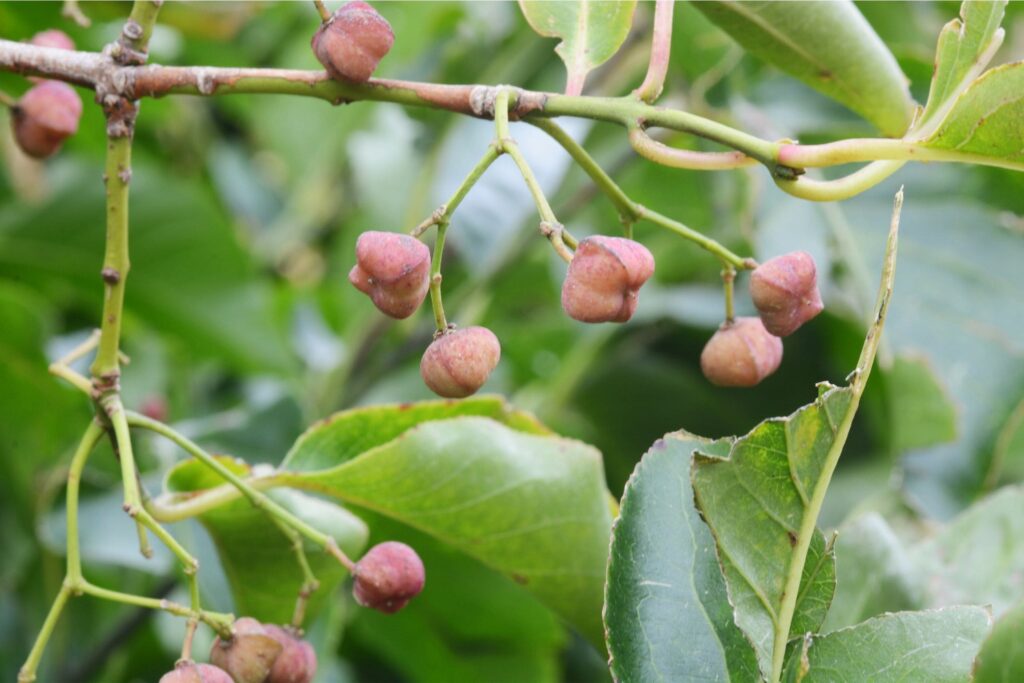
Spindle is a deciduous shrub or small tree that can grow up to about 6 metres tall. It has green, oval-shaped leaves that turn a bright pinkish-red in autumn, providing a stunning display of colour.
The most distinctive feature of the Spindle is its fruits. They are four-lobed, pink capsules that burst open in the autumn to reveal bright orange seeds within, which hang out of the fruit like beads.
All parts of the Spindle tree, particularly the seeds contained within the fruits, are poisonous to humans and animals. They contain a mix of toxic compounds, including alkaloids and glycosides, leading to symptoms like nausea and dizziness.
The Spindle tree thrives in a variety of habitats but is most commonly found in hedgerows, woodlands, and scrub areas. It prefers calcareous soils and can be seen throughout the UK, particularly in southern and eastern areas.
Safety and Precautions for Avoiding Poisonous Berries in the UK
While the allure of wild berries can be strong, especially to the curious or uninformed, it’s vital to understand the risks associated with these plants. Here are some safety tips so you can prevent getting mixed up with the most poisonous berries in the UK:
- Never eat berries unless you’re 100% sure of their identity. Use a good foraging book, or plant identification guide as a starting point.
- Teach children about the dangers of unknown berries.
- Keep pets, such as dogs away from any berries, such as holly wreaths around Christmas.
- Wear gloves when handling potentially toxic plants.
- If ingestion occurs, seek immediate medical attention.
The British countryside is a wonderful place to explore and learn about the abundance of nature, but it’s essential to tread carefully and respect the natural world, especially its more dangerous elements. By understanding and recognising these toxic berries, you can enjoy the beauty and diversity of nature while keeping you and your family safe.
You may also be interested in some of our other related articles, such as foraging best practices or overrated wild foods.
Note: This article is for informational and entertainment purposes only and is not a comprehensive foraging or bushcraft guide. Foraging requires accurate knowledge to safely identify edible species. Misidentification can lead to harmful or fatal consequences. Always consult a professional or reliable guide before consuming wild foods, and adhere to foraging best practices.